You can have brilliant fitters and still run a chaotic operation. Skill on the tools is one thing. Getting the right people to the right job, with the right materials and the right information, at the right time - that's a different challenge entirely. And it's the one that decides whether you can grow.
When a fitting team is disorganised, it rarely looks dramatic. It looks like a fitter texting "what's the address again?" at 7am. It looks like two people turning up to a job that needed three. It looks like the new lad standing around because nobody told him what he was meant to be doing. Each one is small. Added up across a year, they cost you days of productivity and a reputation for being a bit shambolic.
The good news: organising a team isn't about being a hard taskmaster or buying everyone a clipboard. It's about removing the friction that stops good people doing good work.
Disorganisation is an information problem, not a people problem
When something goes wrong on site, it's tempting to blame whoever was standing there. But most team problems aren't about effort or attitude. They're about people not having what they needed to do the job properly.
A fitter who turns up without the right glass didn't necessarily mess up - more often, the information about what was ordered and when it arrived lived in someone else's head or a WhatsApp thread nobody checks The hidden cost of running your fitting business from WhatsAppWhatsApp feels free until your job photos, customer history and fitter knowledge live on personal phones instead of in the business, and then every dispute, handover and evening ping has a hidden cost.. A crew that finishes late because the access was awkward probably never saw the survey notes that flagged it.
Fix the information flow and most "people problems" quietly disappear. Your team can only be as organised as the information you give them.
Give every job a clear owner
The first question on any job should have an obvious answer: who's responsible for this? Not just who's swinging the hammer, but who owns the outcome - making sure it's surveyed properly, scheduled, materials ordered, and signed off.
On a one-van operation that's you, for everything. As you grow, it has to be delegated, and that's where it gets messy. If three people each assume someone else booked the scaffold, nobody did.
Assign a lead for each job. They don't have to do everything, but they're the point of contact and the person who notices if something's slipping. This single habit removes a huge amount of "I thought you were doing that" friction. It also gives you somewhere to look when you're trying to understand why a job lost money Why Window Fitting Companies Lose Money On JobsJobs rarely lose money in dramatic ways, they bleed it in measurable places you can't see unless you compare what you quoted with what the job actually cost, which is the one habit most fitters skip..
One schedule everyone can actually see
Most team chaos traces back to the schedule. If your crews don't know where they're going tomorrow without ringing the office, your schedule isn't doing its job.
A wall calendar or whiteboard works until your team is out on site - which is most of the time. The schedule has to be where your fitters are: on their phones. They should be able to check tomorrow's jobs from the van, see the address, and know who they're working with, without anyone having to tell them.
This is also how you stop double-booking your team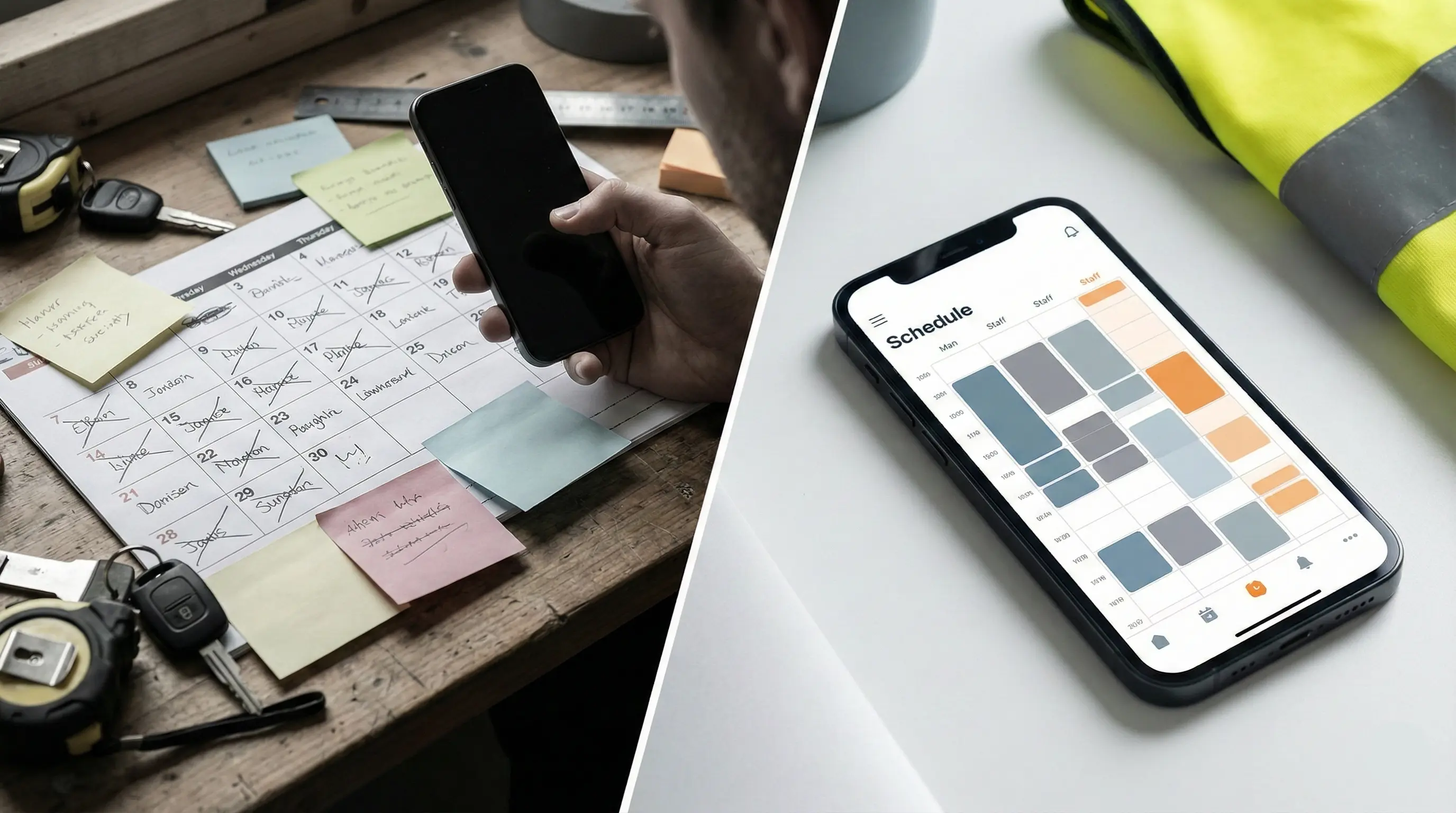 How to stop double-booking your fitting team (without a wall calendar)Double-bookings are almost never carelessness; they're what happens when your diary lives in three places and nobody sees the full picture at the moment they say yes.. When everyone looks at one live schedule, conflicts are visible before they become two vans at the wrong addresses. Proper scheduling software for installers
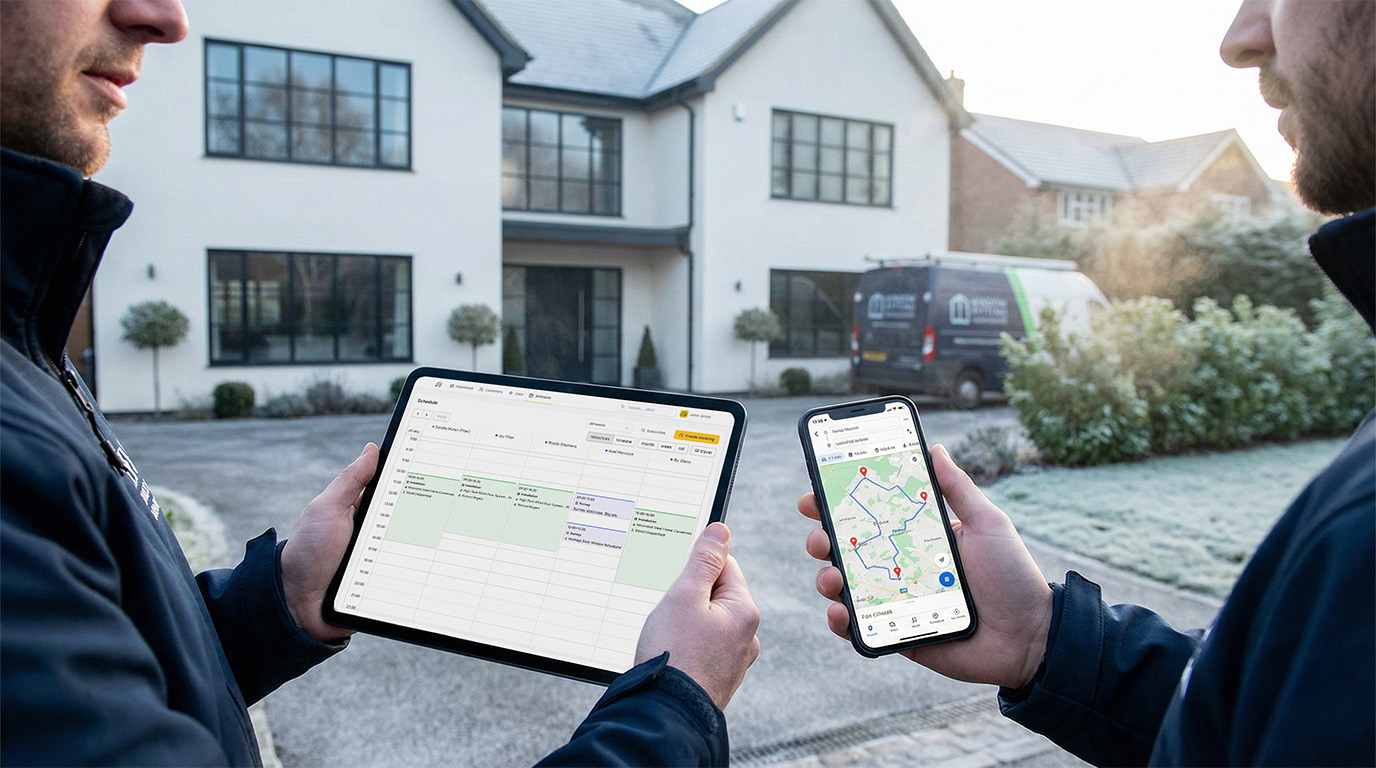 Scheduling software for installersInstallers need scheduling that shows who's where, notifies customers and staff automatically, and gives fitters their day on their phone without group-chat chaos. makes the schedule a single source of truth rather than a record of what someone meant to happen.
Make job details travel to the fitter
Getting the right person to the right place is only half of it. They also need to arrive knowing what the job actually involves.
Every job should carry its full story to site: the survey notes, the measurements, photos of the existing frames, the spec the customer agreed, any quirks about access or parking. When a fitter can pull all of that up on their phone, they stop guessing and stop ringing the office. They turn up prepared.
This is where keeping everything in one place pays off. If each job lives in one system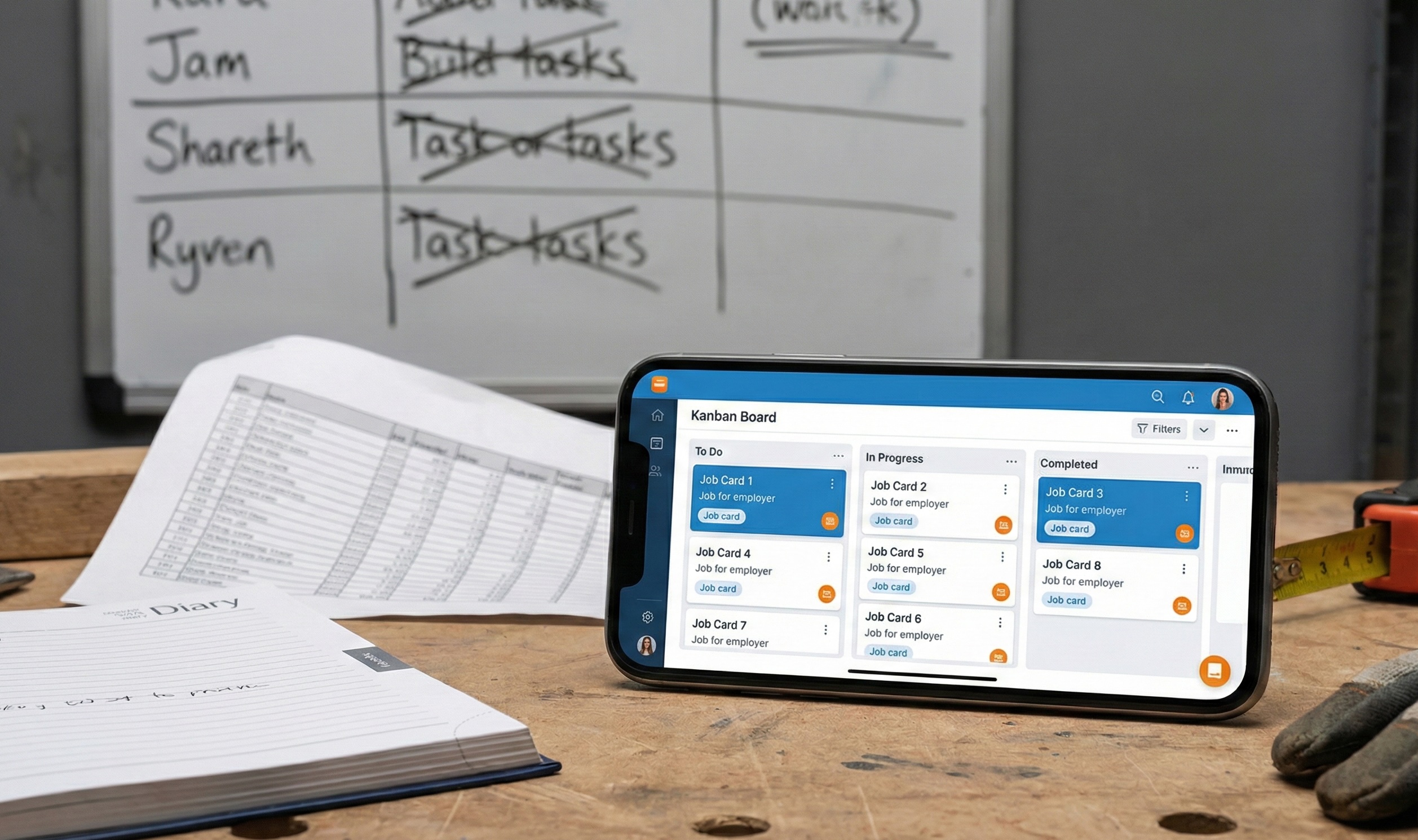 How to track window fitting jobs properlyTracking jobs across WhatsApp, memory and stale spreadsheets stops working around ten live jobs, and one shared record per job with status, photos and schedule is the fix. - notes, photos, schedule, and history together - the information your team needs is never more than a tap away. It's the same principle behind organising the wider business
 How to organise a window fitting businessAn organised fitting business knows where every job stands, keeps customers and schedules in one place, and attaches photos to jobs instead of losing them in phones.: stop information getting lost between people.
Build a feedback loop from site back to the office
An organised team isn't just well-briefed going out - it reports back coming in. You need to know when a job's done, when something's gone wrong, and when an install ran over so the next one needs adjusting.
If your only feedback is a pile of texts and a chat at the end of the week, problems surface too late to fix. By then the customer's already annoyed and the next job's already booked wrong.
Make it easy for fitters to update from site: mark a job complete, snap a completion photo, flag an issue. The easier you make reporting back, the more you'll actually get. And the more you get, the earlier you can step in - which is the whole point of managing projects properly Effective Project Management For Window FittersMost jobs slip not because the fitting is hard but because information is scattered, so the fix is one record per job, real timelines, and materials confirmed before the van leaves. rather than firefighting.
Match the crew to the job
Not every job needs your best fitter. Not every job can be handled by your newest. Organising a team also means being deliberate about who you send where.
Send your most experienced people on the tricky heritage jobs and the difficult customers. Pair apprentices with patient mentors on straightforward installs where they'll learn without holding things up. If you're bringing on apprentices Apprenticeships for Small Window Fitting CompaniesWhen good fitters are nearly impossible to hire, growing your own through a structured apprenticeship is often cheaper and more reliable than poaching from a competitor., this pairing is how they become productive instead of standing around.
Thinking about the mix - skill, personalities, who works well together - turns a list of names into an actual team. It also protects your margins, because a mismatched crew is a slow crew.
Protect your team's time
A well-organised team isn't a team that works longer hours. It's one that wastes fewer of them. Every wasted journey, every gap waiting for materials, every redo because of a missed measurement is time you're paying for and getting nothing back.
Batch site visits sensibly so fitters aren't criss-crossing the county. Make sure materials are confirmed before the van rolls. Standardise how surveys are captured so the office isn't deciphering scribbled notes. These are the same time-management habits Time-Management Hacks Every Home Improvement Pro Should KnowReclaim hours in your week by batching your admin, protecting time on the tools, and killing the constant task-switching that quietly drains a fitter's day. that keep individuals productive, applied to the whole crew.
How FitterPal keeps fitting teams organised
Everything above comes down to giving your team the right information in the right place. That's what FitterPal is built for.
Each job is the centre of everything: the survey, the photos, the materials, the schedule, and the team assigned to it all live on one record. When you schedule a job, the fitter sees it on their phone with the full details attached - no "what's the address?" texts. When they finish, they mark it complete and upload photos, and you see it back at the office in real time.
Your schedule shows staff in columns and time in rows, so you can see at a glance who's where and spot conflicts before they happen. Jobs link to customers, so the history builds itself. And because the whole team works from the same live picture, you stop being the bottleneck that every question has to pass through.
That's the real goal of organising a team: a crew that runs the job properly whether you're standing there or not. It's also exactly what you need in place before you can take on more work or expand How The Best Window Fitting Companies Stay ProfitableIn a trade running on roughly 2% net margin, profit is won in percentage points, and the best firms protect them through disciplined pricing, near-zero rework and tight scheduling rather than by fitting more windows. without the wheels coming off.
Book a demo today and we'll show you how FitterPal keeps your fitting team organised, informed, and running smoothly.