Most jobs that go wrong don't go wrong on the tools. They go wrong in the gaps between the measure, the order and the fit. The construction industry has measured the price of those gaps, and it's brutal: the Get It Right Initiative, set up by the Institution of Civil Engineers, puts the direct cost of avoidable error at around 5% of project value, higher than the roughly 3% average profit margin across UK construction (Get It Right Initiative). Mistakes can quietly cost more than the job makes.
That isn't a fitting problem. It's a coordination problem, and it's the one eating your margin. Here's how to close the gaps.
Put everything for a job in one place
The most expensive habit in the trade is letting information scatter. An FMI study of construction professionals found they spend around 35% of the working week, over 14 hours, on non-productive tasks, including five and a half hours just hunting down job information, and that poor data and communication sits behind nearly half of all rework (FMI, Construction Disconnected). That's a fitter's week being described, not an office worker's.
The fix is one record per job holding the address, measurements, the customer's specific requests, photos and the quote. Not a measurement in a text, a request on a voicemail and the address in your head. The test is simple: if a crew member picked up the job tomorrow with you unreachable, could they run it from what's written down? If not, the job depends on your memory, and memory is what fails on a busy week. A properly tracked job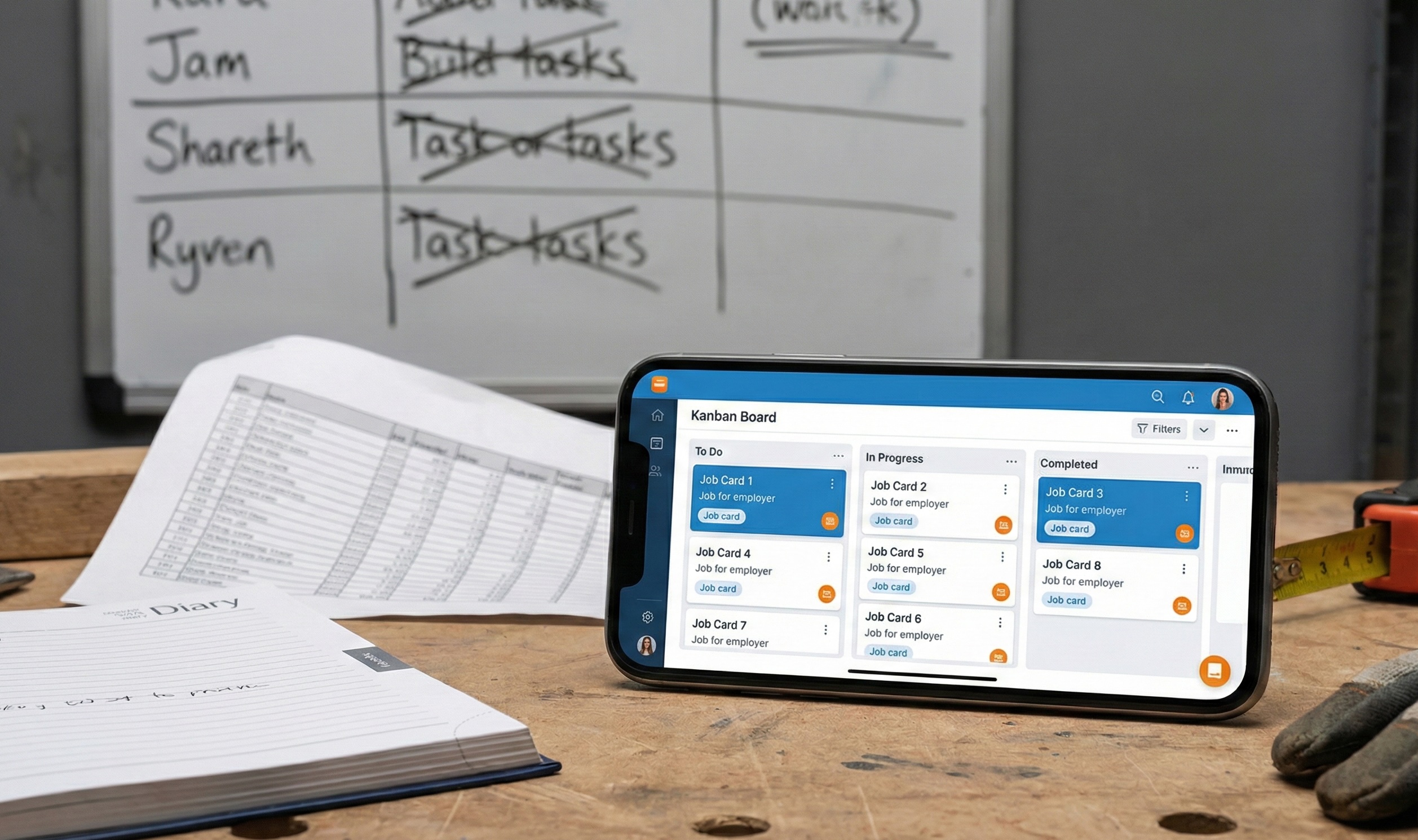 How to track window fitting jobs properlyTracking jobs across WhatsApp, memory and stale spreadsheets stops working around ten live jobs, and one shared record per job with status, photos and schedule is the fix. is the unglamorous foundation everything else sits on.
Give every job a real timeline
Construction is the slow learner of the productivity world. McKinsey's global study found labour productivity in the sector has grown about 1% a year for two decades, against 2.8% for the wider economy, and put much of the blame on weak planning and execution rather than weak workers (McKinsey Global Institute, Reinventing Construction).
The cheap fix is a timeline you can actually feel. Break each job into its real stages, survey, order, fit, snag, and give each one a date rather than a vague "next week". A deadline forces decisions early, when changing the plan is cheap, instead of on fitting morning when it's expensive. A job with no timeline isn't flexible, it's just undefined, and undefined jobs are the ones that collide with the next booking.
Keep the conversation attached to the job
The expensive calls are the "where are you?" ones, and they happen when the customer has no idea what's coming next. A booked-in survey, a confirmed fit date, a heads-up when the glass is delayed: each removes a reason for them to chase you, and each lands better when it's logged against the job rather than scattered across personal phones.
This is where one record pays off twice. When the crew and the office read from the same information, nobody confirms a date that's already moved, and nobody double-books a slot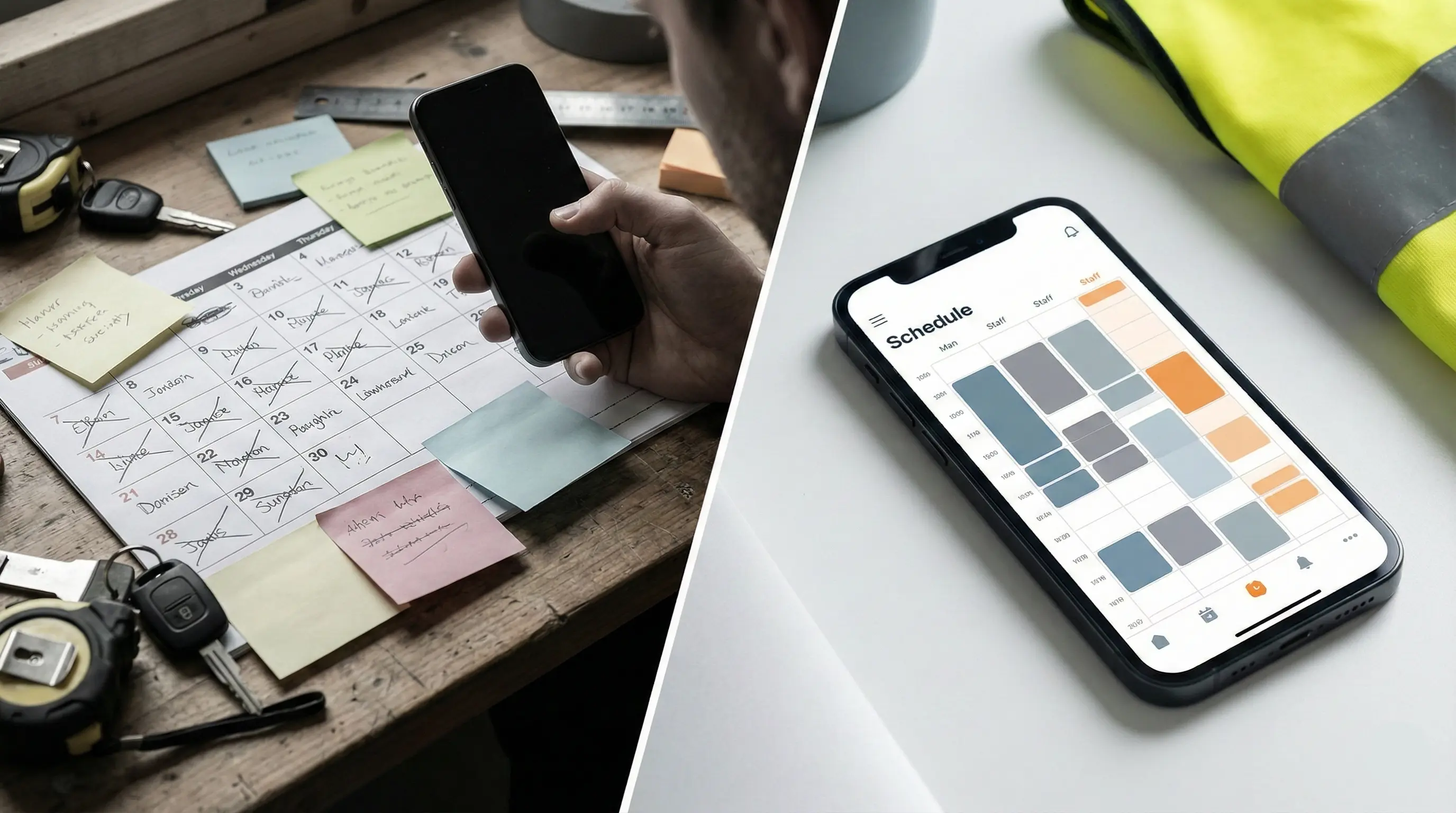 How to stop double-booking your fitting team (without a wall calendar)Double-bookings are almost never carelessness; they're what happens when your diary lives in three places and nobody sees the full picture at the moment they say yes. that's already taken. The customer experience and the internal coordination are the same problem solved once.
Standardise the survey so quality isn't personal
If three fitters measure and quote three different ways, you don't have a process, you have three. The same productivity research blames a lack of standardisation for much of the trade's wasted effort, and it's the easiest thing for a small firm to fix. Standardisation is what lets a team produce consistent work without the owner checking everything.
A fixed digital survey form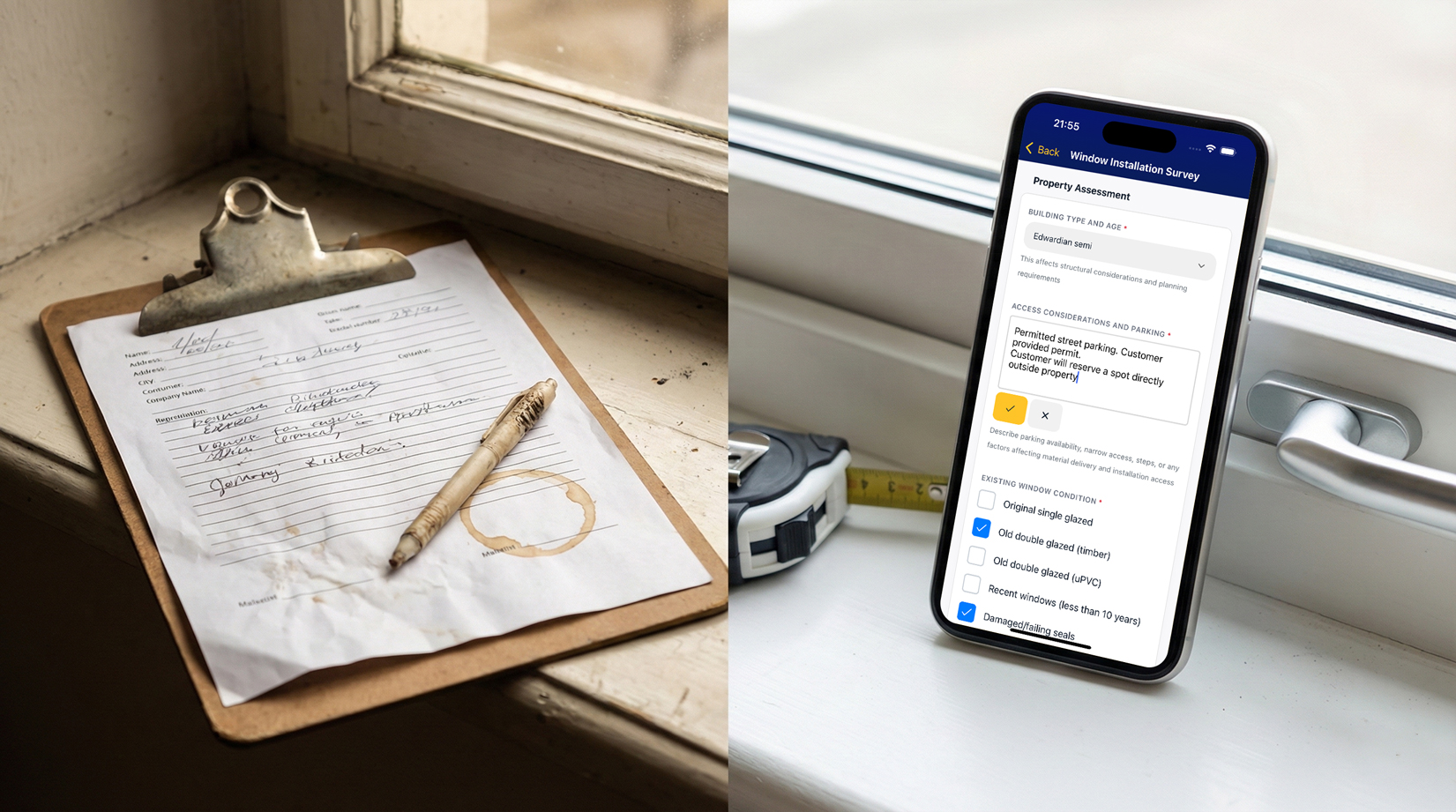 Digital survey forms for window fitters: why paper is costing youDigital survey forms on site replace lost paperwork, illegible notes and disconnected photos with data the office can quote from immediately., the same fields, the same checks, the same sign-off every time, does two things. It stops the silly, costly errors (the missed reveal, the unconfirmed handing), and it makes a new hire productive in days rather than months, because the method lives on the form, not in someone's head.
Track materials before the van leaves
A crew arriving without the right frame or hardware doesn't just lose an hour, it loses the slot, the goodwill and often a second trip. A return visit is the most literal form of rework there is, and rework is the cost the error studies keep landing on.
The fix is a confirmed materials check tied to the job, not a glance in the storeroom on the way out. Reorder consumables before you hit zero, and confirm the job-specific kit is in before the fit date is locked. One missing fixing should never cost a half-day round trip.
Run a two-minute post-job review
Part of why error costs stay invisible in construction is that almost nobody records the causes, only the defects at handover. You can beat the industry on that with two minutes per job: what slowed us down, and is it a one-off or a pattern? A supplier that's always late, a survey field people keep skipping, a van that's always missing the same trim. Patterns are cheap to fix once you can see them, and you can only see them if jobs are recorded consistently in the first place.
The bottom line
Effective project management isn't about doing more. It's about closing the gaps between stages where, by the industry's own numbers, the money leaks out. Keep each job on one record, give it a real timeline, standardise the survey, and confirm materials before you travel. FitterPal keeps addresses, measurements, stages, notes and stock checks on a single job record, so the coordination happens by default and the hours you'd lose to chaos go back into fitting.