
If you're turning work away, running 60-hour weeks, or watching lead times slip because you can't find a reliable fitter, you're not alone. UK construction needs around 41,200 extra workers every year to 2030, and the fenestration trade has been shrinking for years: glaziers, window fabricators and fitters fell from 54,100 to 34,400 between 2005 and 2024, while over 1,100 installer roles were advertised at a single point in time (CITB Construction Workforce Outlook; The Glazine, citing Building Our Skills and ONS).
The uncomfortable detail in that second figure: filling a vacancy by hiring from another firm doesn't shrink the gap, it just moves it. Growing your own is one of the few ways to add capacity that doesn't depend on someone else losing a fitter.
Why apprenticeships beat hoping the right bloke turns up
Recruitment is expensive and unreliable in a trade this short of people. An apprentice isn't free labour on day one, but over 18 months they become someone who fits the way your firm works, on your products, with your customers. That matters more than it sounds when every mis-measure and snagging callback comes from someone who learned on a different system.
There's also a formal route built for this trade. The Level 2 Fenestration Installer apprenticeship (ST0743) covers exactly what you'd want someone learning on site: measuring, installing windows and doors across PVC-U, aluminium, timber and composite, Building Regulations, glazing orientation, and safety glass requirements. It runs around 18 months and ends with an independent assessment (Skills England, Fenestration Installer standard). You're not inventing a training programme from scratch.
What the funding actually looks like
For most small firms, the numbers are better than people assume. Non-levy employers pay 5% of training and assessment costs and the government covers the rest, up to the funding band maximum. On a £5,000 programme, that's £250 from you and £4,750 from government. For apprentices aged 16 to 21 at the start of training, training costs can be fully funded (GOV.UK, apprenticeship funding).
There's also a £1,000 employer payment when you take on an eligible apprentice, typically aged 16 to 18, or 19 to 24 with an education, health and care plan or care experience. That helps with the early costs: PPE, travel, the weeks before they're genuinely useful on site.
Check the current rates and rules on GOV.UK before you commit, because funding bands and incentives do change. The point is that training cost is rarely the blocker for a small installer; structure and time on site are.
Retention is the return most owners underestimate
The payoff isn't just filling a seat now. It's keeping someone who already knows your jobs, your suppliers and your standards. Research from the Institute of Student Employers found 61% of apprentices were still with their original employer five years after completing their programme (ISE).
Compare that with recruiting externally in a market where over a thousand installer roles were open at once. Every external hire is a auction against your competitors. An apprentice who stays is capacity you've built that nobody can poach without starting again from zero.
Where apprenticeships go wrong (and how to avoid it)
Most failed apprenticeships in small fitting firms share the same cause: the apprentice spends six months holding the ladder and sweeping up, then leaves because they've learned nothing and you've gained nothing. That's not an apprenticeship problem, it's a structure problem.
Treat it like any other job on your board:
- Week one to four: site safety, tool familiarisation, observing surveys and installs, learning how you measure and record.
- Month two to six: supervised tasks with a clear checklist: packing, sealing, assisting on straightforward replacements.
- Month six onwards: increasing responsibility on jobs they've seen before, with sign-off from a named mentor.
Write the progression down. Assign a mentor who gets time to teach, not just someone the apprentice follows when it's convenient. Tie training tasks to real jobs so they're learning on work you're being paid for, not abstract exercises.
This is where organising the business How to organise a window fitting businessAn organised fitting business knows where every job stands, keeps customers and schedules in one place, and attaches photos to jobs instead of losing them in phones. properly pays off. If jobs, checklists and training steps live in one system, your apprentice has a clear path and you can see whether they're progressing or stalling. FitterPal keeps jobs, tasks and progress on one record so an apprentice isn't an afterthought slowing the van down, they're a planned part of how the week runs. Pair that with sensible scheduling
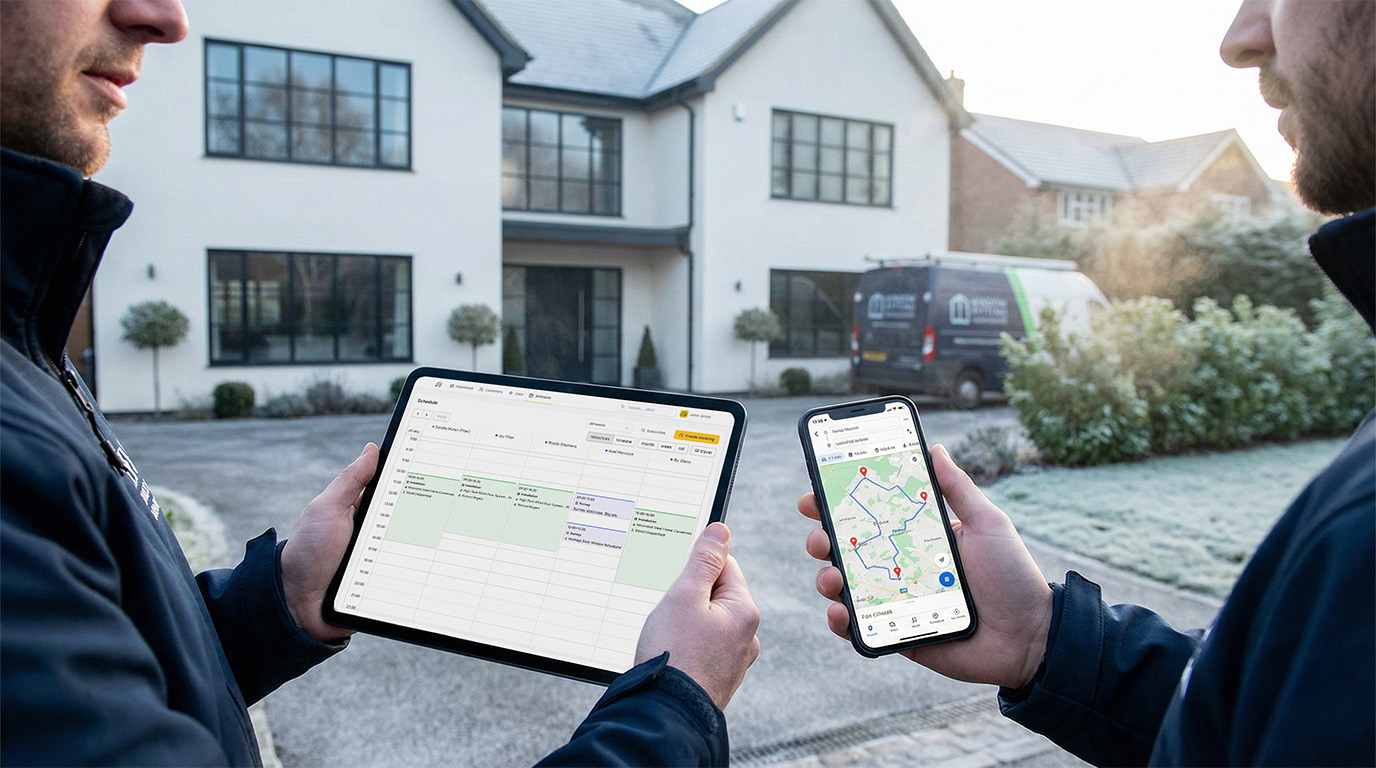 Scheduling software for installersInstallers need scheduling that shows who's where, notifies customers and staff automatically, and gives fitters their day on their phone without group-chat chaos. so mentor time is booked, not squeezed in between jobs.
Where to start
If you're already at capacity and can't spare a mentor, fix that first or wait until you can. An apprentice without supervision is a liability, not an investment.
If you can spare the time, find a training provider for the Fenestration Installer standard, check your funding position on GOV.UK, and identify one experienced fitter who'll own the mentoring. Start with one apprentice, get the structure working, then scale.
The skills gap isn't going to fix itself, and hiring your way out of it mostly reshuffles the same small pool. Growing your own takes longer upfront and pays back for years.