
Here's the thing about losing money on a job: it almost never feels like losing money at the time. The work gets done, the invoice goes out, the customer's happy. The loss is buried in hours nobody counted and small overruns nobody flagged, and because most fitters never compare the quote with the actual cost, the same loss-making job gets repeated again and again.
That blind spot is normal, not a sign you're bad at this. Even in professionally managed construction, only 31% of projects come in within 10% of budget (KPMG capital projects research). If firms with full-time quantity surveyors miss their numbers two times out of three, a busy fitter pricing from memory between jobs is going to miss too. The difference is whether you find out and adjust. Here's where the money actually goes.
The leak you can't see: quoted versus actual
The single most expensive habit in the trade is invoicing a job and moving straight to the next one without ever asking what it really cost to deliver. Without that comparison, every quote is a guess dressed up as a price, and a quote that's quietly 10% light doesn't lose you one job, it loses you every similar job you win on the same numbers.
The fix is unglamorous: log actual hours and materials against the original quote on every job, and look at the gap. Do it for a month and patterns jump out, the job type you always underprice, the customer who always takes longer, the extra that never makes it onto the invoice. This is the difference between tracking jobs properly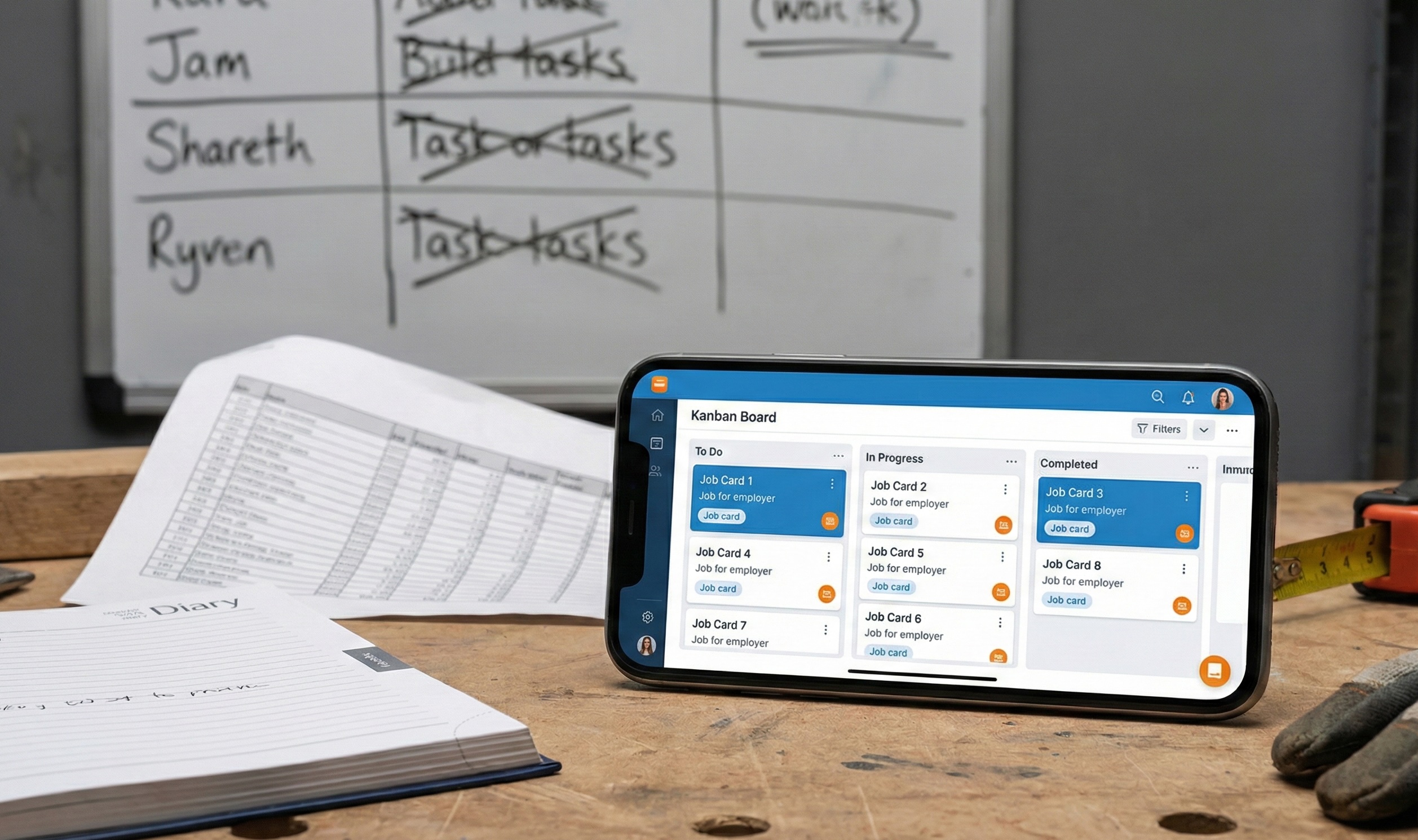 How to track window fitting jobs properlyTracking jobs across WhatsApp, memory and stale spreadsheets stops working around ten live jobs, and one shared record per job with status, photos and schedule is the fix. and flying blind, and it's the foundation everything below depends on.
Underpriced before you've even started
Plenty of losses are locked in at the survey, before a single window comes out. A measurement a few centimetres off means a re-ordered unit, a wasted slot and a return trip. A labour estimate based on the easy version of the job ignores the hidden lintel or the awkward access that adds half a day. Across construction, the direct cost of getting it wrong, the rework, runs at around 5% of project value, comparable to a fitter's entire net margin (Get It Right Initiative).
The cheapest place to catch all of this is at the survey, with a consistent process rather than your memory. A structured survey form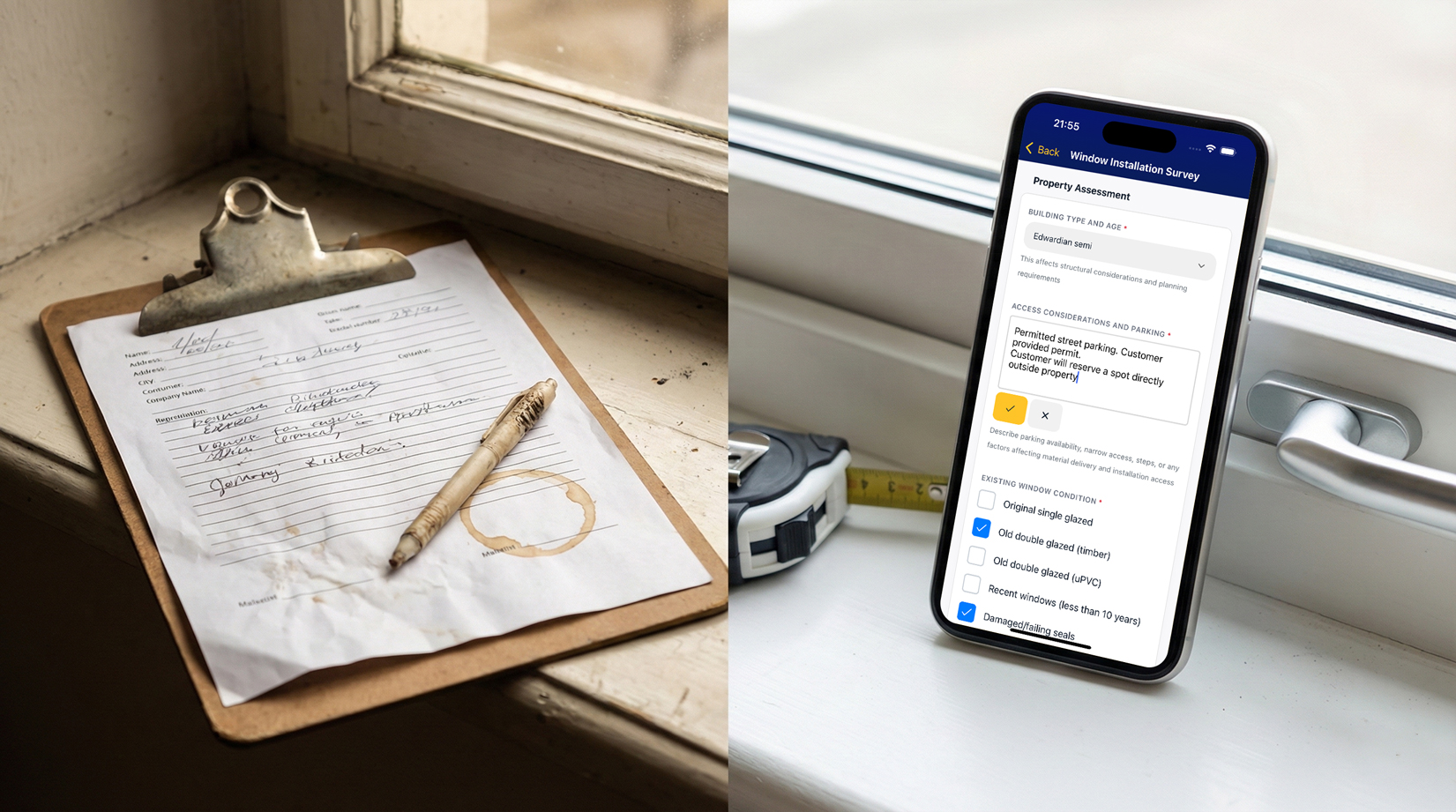 Digital survey forms for window fitters: why paper is costing youDigital survey forms on site replace lost paperwork, illegible notes and disconnected photos with data the office can quote from immediately. that forces the awkward questions, access, glass spec, who's confirming the final size, stops the predictable misses, and knowing your true job costs
 Calculating Job Costs: Tools and Tips for Accurate QuotesJobs that look fine on the quote still leak margin when you skip consumables, overhead and contingency, and tight costing with real labour and supplier numbers is how you stop donating profit. means the number you write down actually covers the work.
You're paying for hours that aren't fitting
Labour is your biggest variable cost, and most of it isn't spent fitting. Site studies consistently find only around 30 to 40% of a working day is genuinely productive "tool time", the rest lost to travel, waiting, hunting for materials and doubling back (Kwant.ai, construction site productivity analysis). You're paying full wages for all of it.
You'll never hit 100%, but the wasted slices are where jobs quietly go underwater. A double-booked crew How to stop double-booking your fitting team (without a wall calendar)Double-bookings are almost never carelessness; they're what happens when your diary lives in three places and nobody sees the full picture at the moment they say yes. loses a whole visit. A van sent without a confirmed materials list buys a second round trip. A vague brief means a fitter standing in a driveway phoning the office instead of working. None of these show up on the invoice as a loss, but every one is margin you costed for and gave away.
The extras you give away for free
This is the one experienced fitters underrate most. It's the "while we're here, could you just..." that you say yes to without a thought, the extra trim, the bit of making good, the second trip to hang a door that wasn't quite ready. Individually trivial, collectively they're a job's profit handed over for goodwill.
Saying yes can be the right call for a good customer, but it should be a decision, not a reflex. The firms that hold their margin are the ones who notice the scope creeping and either price it or politely defer it. You can only do that if the original scope was written down clearly enough to know when you've left it, which loops straight back to surveying and quoting properly in the first place.
Where to start
Pick your last five completed jobs and, even roughly, work out what each actually cost you in hours and materials against what you quoted. That single exercise tells you more about where you're losing money than any amount of advice, because it's your numbers, not the industry's.
Then make it routine: quote from real costs, capture the scope cleanly, and check actual against quoted on every job so the next price is sharper than the last. Most of that depends on having quoting, quote tracking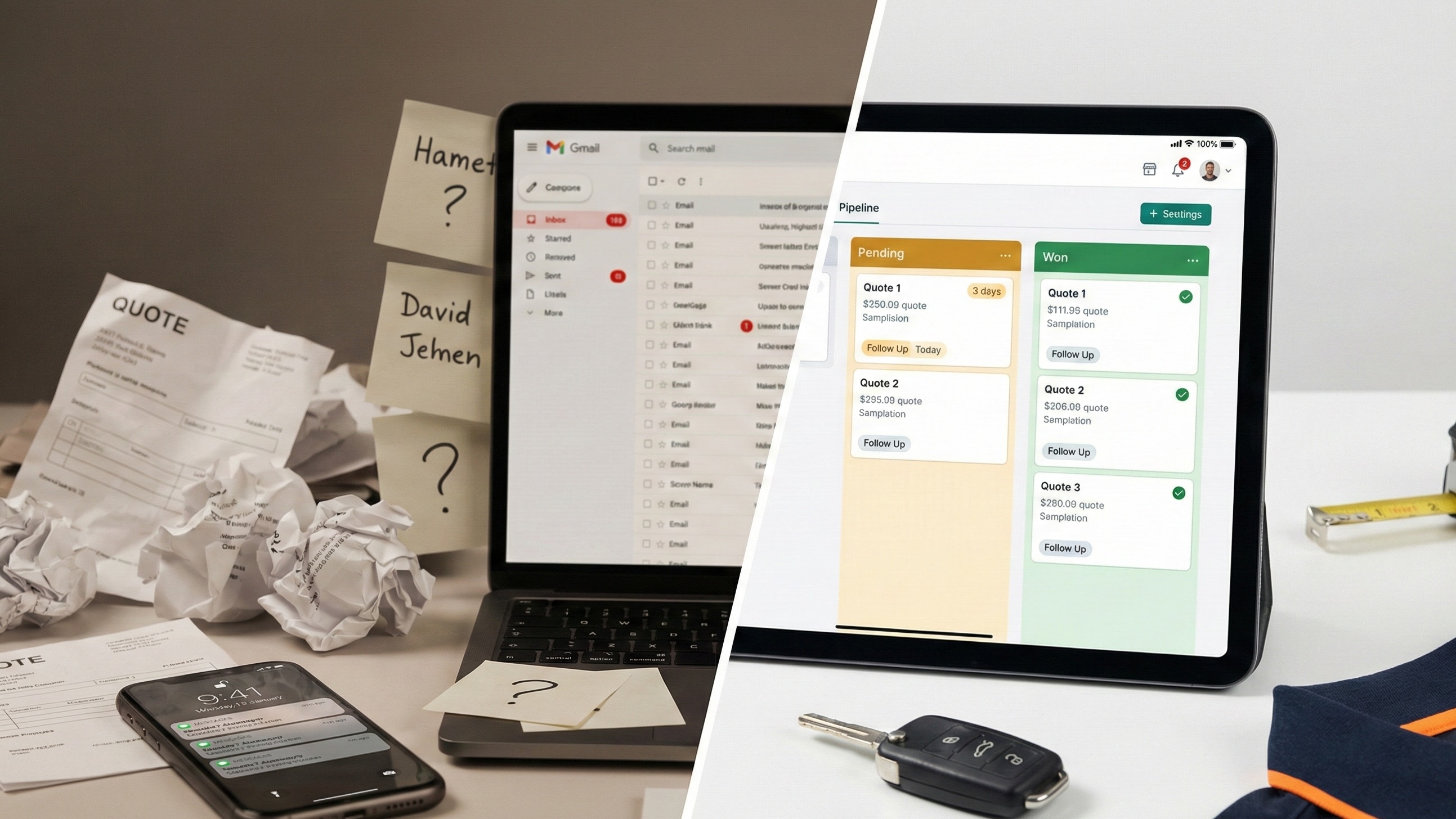 How to stop losing track of quotesYou lose quotes because they sit scattered across email, spreadsheets and memory, not because customers aren't interested, so every outstanding quote needs one visible pipeline with timed follow-up., job notes and time in one place rather than across paper and phones. FitterPal is built to surface each job's real profit without a spreadsheet, so the leaks become visible, and a visible leak is one you can finally plug. For the bigger margin picture, see how the best firms stay profitable
 How The Best Window Fitting Companies Stay ProfitableIn a trade running on roughly 2% net margin, profit is won in percentage points, and the best firms protect them through disciplined pricing, near-zero rework and tight scheduling rather than by fitting more windows..