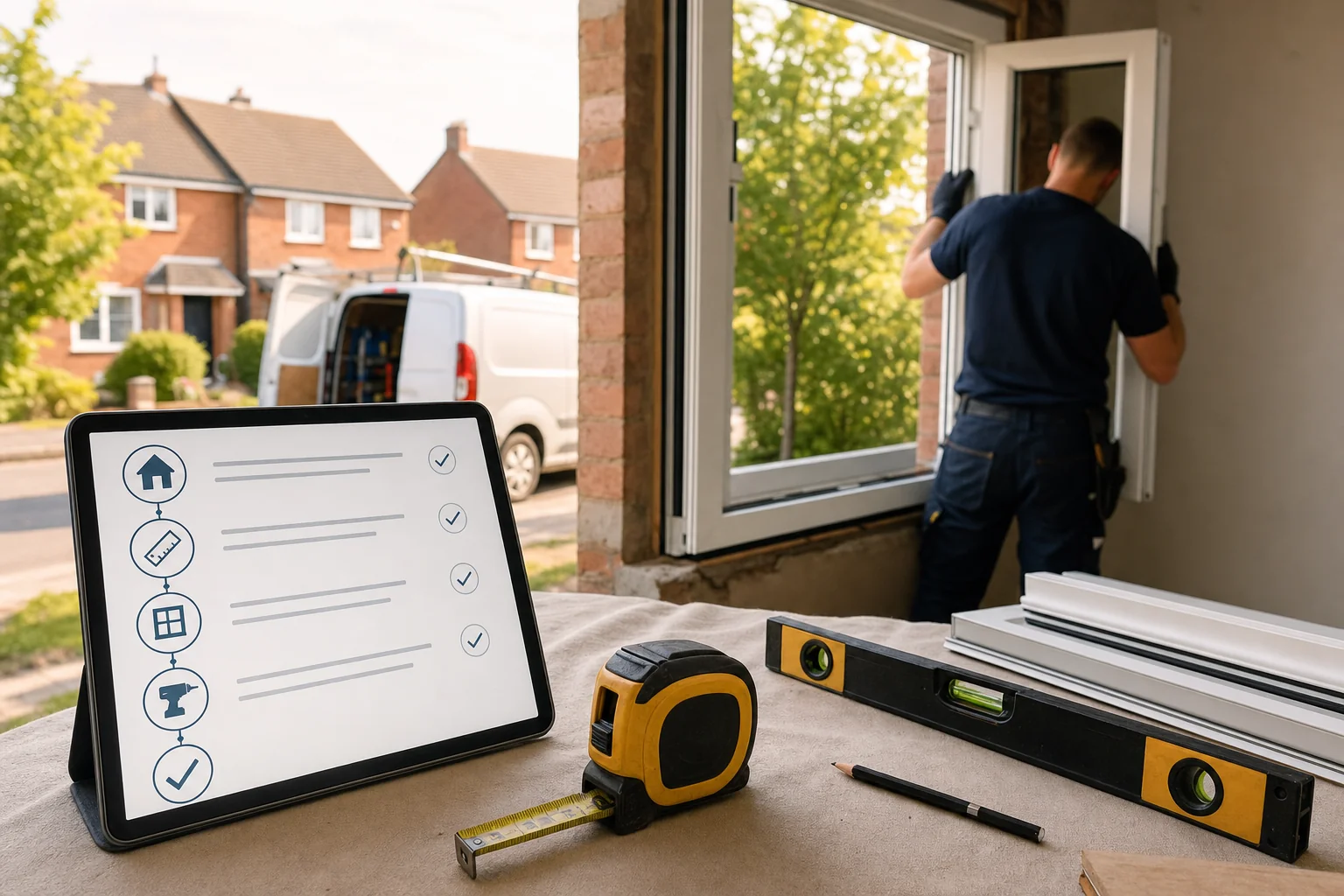
Here's something easy to miss when you're busy: almost every job your business takes on runs through the same path. Enquiry, survey, quote, deposit, order, schedule, install, sign-off, invoice, certificate. The customers change, the windows change, the access changes. The process barely does.
So why do most installers run each job from memory, as if it's the first time? Because the work feels different every day, and the path is so familiar it never gets written down. That's exactly where the money leaks. The danger isn't the dramatic mistake. It's the small, predictable step that quietly gets skipped on a hectic week.
The missed step is rarely the obvious one
A wrong measurement gets caught. A whole missing window gets caught. The steps that slip are the quiet ones with no immediate consequence:
- The trickle vent that wasn't confirmed at survey, found on fitting day.
- The deposit that never got chased, so materials were ordered against your own cash.
- The quote that sat for ten days because nobody owned the follow-up.
- The FENSA notification that missed its window after a clean install.
- The sign-off photo nobody took, until the customer disputes the plaster six months later.
None of these feel like failures in the moment. Each one is margin you costed for and gave away. Across construction, getting it wrong (the rework) runs at around 5% of project value, comparable to a healthy installer's entire net margin (Get It Right Initiative). Most of that isn't bad workmanship. It's good work undone by a step that fell through a gap.
A guided process beats a good memory
The fix isn't trying harder to remember. Human memory isn't built to track twenty parallel jobs, each at a different stage, reliably. The fix is making the path explicit: every job follows the same defined steps, and each step has to be ticked before the job moves on.
That sounds like bureaucracy. It's the opposite. You already know the order. Writing it down once means you stop re-deciding it on every job, and you stop relying on whoever happened to be on site to remember the awkward detail. A deposit step that won't clear until payment's in. A survey step that prompts for glass spec, cill type and trickle vents every time. A completion step that won't close without the certificate. The process carries the load so your head doesn't have to, which is the difference between tracking jobs properly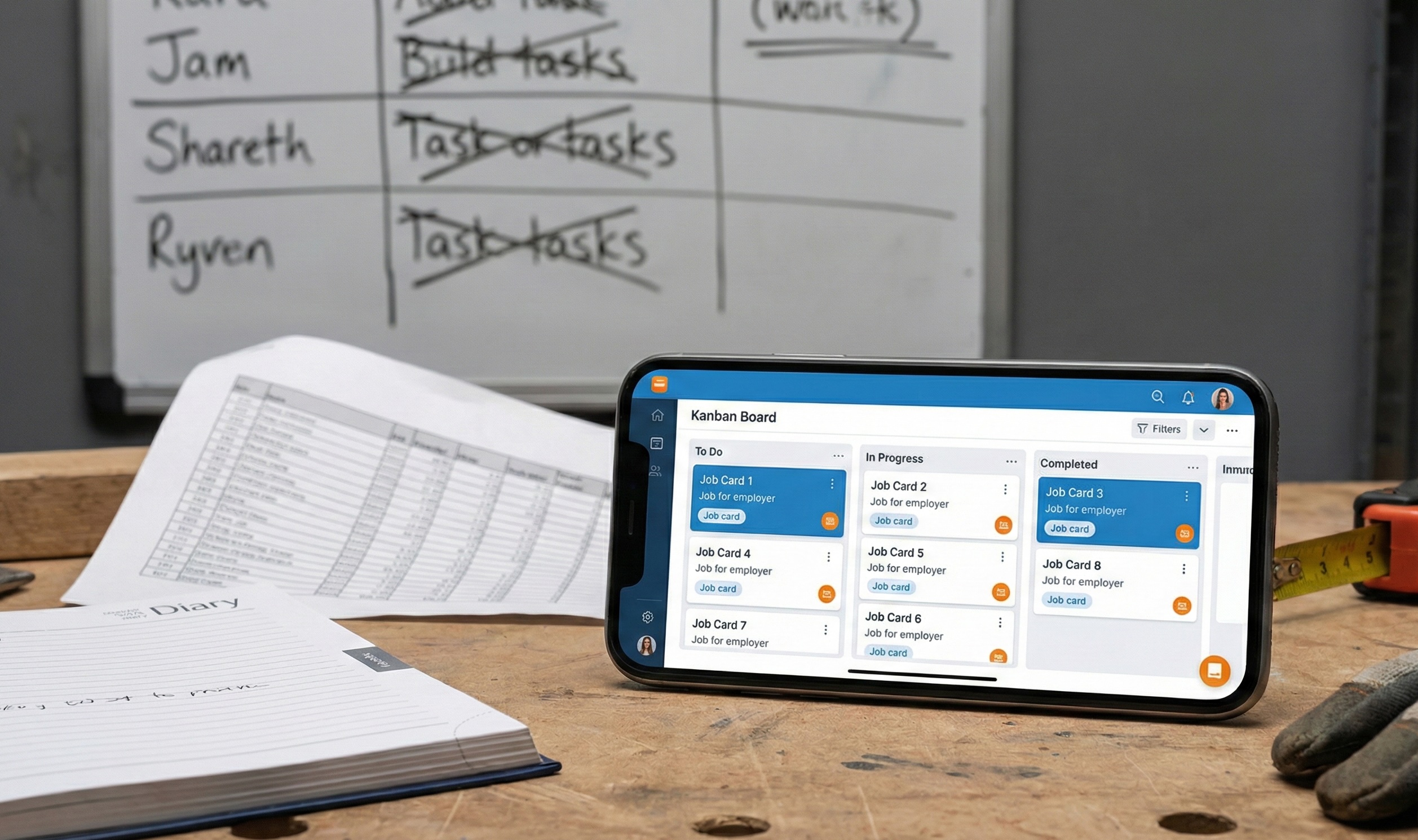 How to track window fitting jobs properlyTracking jobs across WhatsApp, memory and stale spreadsheets stops working around ten live jobs, and one shared record per job with status, photos and schedule is the fix. and hoping nothing slipped.
Why generic tools let you down
This is where most software disappoints installers. A CRM built for sales teams or a project tool built for offices doesn't understand a survey, a remake, a deposit-before-order, or a FENSA certificate. So you bend your business to fit its generic stages, the trade-specific steps live nowhere, and the gaps reappear.
A process built for window installation already knows the shape of the work. It knows a survey comes with measurements and photos attached, that materials shouldn't be ordered before a deposit clears, that a completion isn't done until it's notified and invoiced. Different work can follow different paths too: a full installation, a maintenance visit and a supply-only order aren't the same job, and shouldn't pretend to be. When the steps match how you actually work, people follow them, because the right thing is also the easy thing.
What changes when the process is clear
Three things shift, and they compound.
Fewer slips. The predictable misses (deposits, follow-ups, trickle vents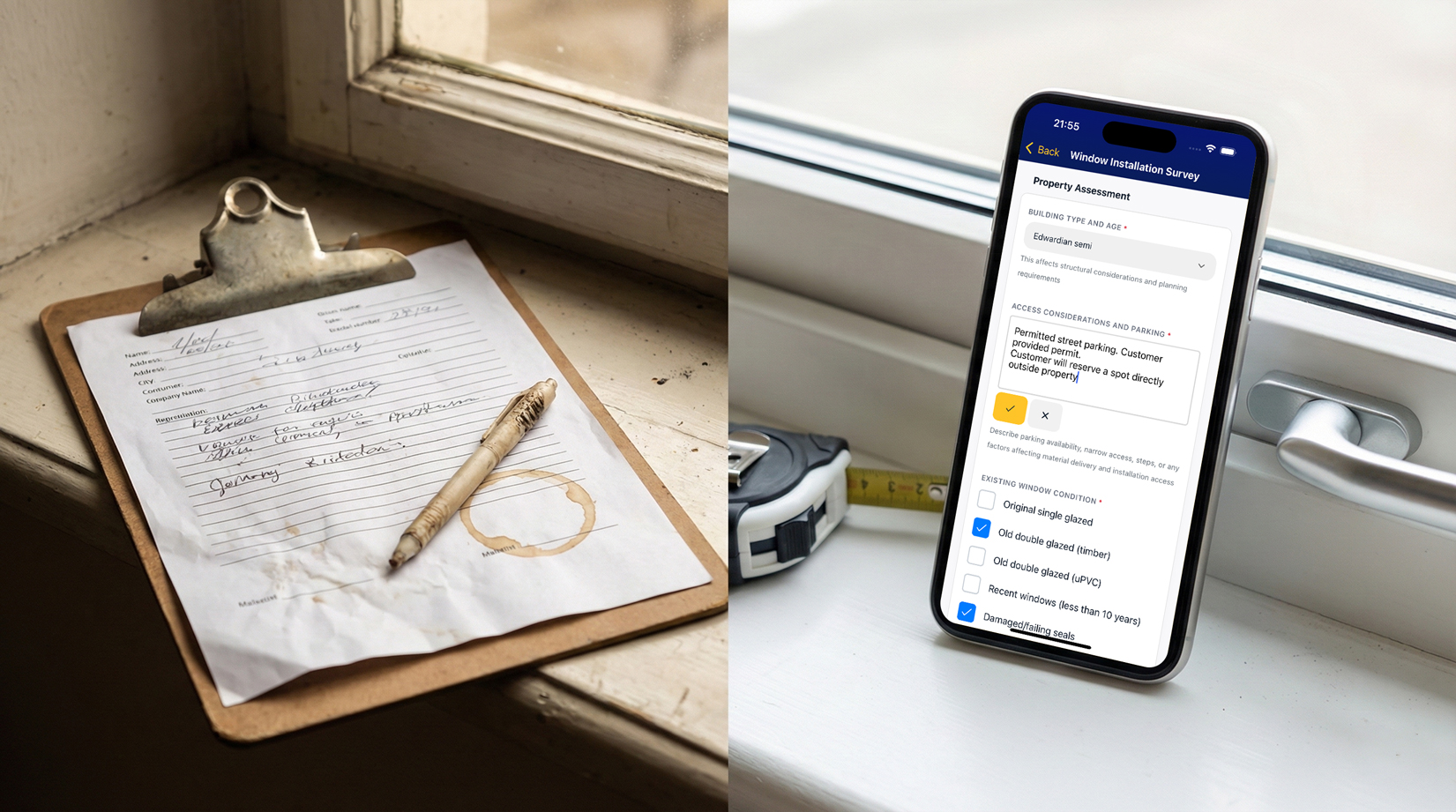 Digital survey forms for window fitters: why paper is costing youDigital survey forms on site replace lost paperwork, illegible notes and disconnected photos with data the office can quote from immediately., certificates) stop happening, because the job can't quietly skip them.
Cleaner handovers. When everyone follows the same path, the office and the installers are never guessing who did what. No more WhatsApp archaeology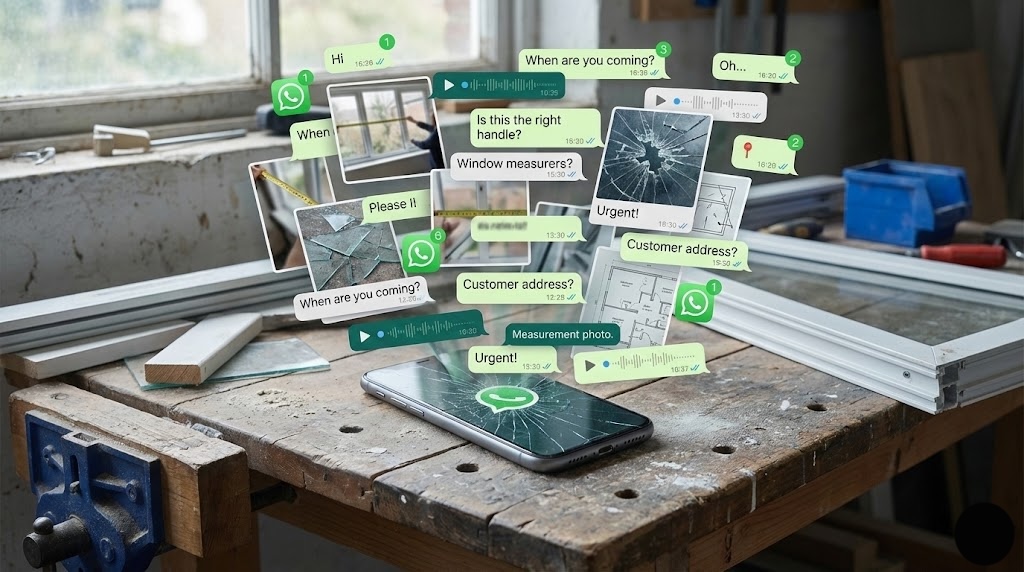 The hidden cost of running your fitting business from WhatsAppWhatsApp feels free until your job photos, customer history and fitter knowledge live on personal phones instead of in the business, and then every dispute, handover and evening ping has a hidden cost. to find what was agreed.
Calmer growth. A clear process scales where memory doesn't. Ten jobs or fifty, the steps are the same, so volume stops meaning chaos and the avoidable losses that quietly sink jobs Why Window Fitting Companies Lose Money On JobsJobs rarely lose money in dramatic ways, they bleed it in measurable places you can't see unless you compare what you quoted with what the job actually cost, which is the one habit most fitters skip. stop repeating.
Make the path explicit
You don't need to reinvent how you work. You already have a process; it's just living in your head and getting reinvented daily. Write it down, make every job follow it, and make the awkward steps impossible to skip.
FitterPal builds this in with SmartStages: a guided path for each job, shaped around how window installation actually runs, so what needs doing next is always obvious and nothing slips between the survey and the certificate.
Book a demo if you'd like to see a guided job process built for the trade.