
Most fitters who say they need "more customers" actually need one of two things: to be visible where homeowners already look, or to convert more of the enquiries they're already getting. The second is cheaper, but you can't fix either until you understand where the decision really happens.
It isn't on your website. Survey data from 500 marketers found Google Search and Maps, word of mouth, and review sites account for 63% of local buying decisions before a customer ever makes contact, while the business website itself influences only about 10% (Neil Patel, local marketing statistics). Homeowners shortlist three to five firms, scan reviews and profiles, and often contact only one or two. If you're not in that shortlist, no amount of website polish fixes it.
Here's how to get there.
Be findable where the shortlist gets built
When someone searches "window fitter near me", they're not browsing for inspiration. They're building a list to eliminate risk. After a local search, 67% of consumers often or always go on to read business reviews, and 85% treat visible contact details and opening hours as important (BrightLocal, Consumer Search Behavior 2025). If your Google Business Profile is thin, your phone number is buried, or your last review was eight months ago, you're out before the call.
The practical checklist is boring and high leverage: claim and complete your Google Business Profile, match your name, address and phone everywhere (site, van, directories), mention the towns you actually cover in plain language, and keep photos current. A simple lead-focused website that loads fast on mobile and makes calling or booking a survey obvious is enough. You don't need a brochure site, you need to be findable and credible in the places where the decision starts. For the full local playbook, see dominating your local area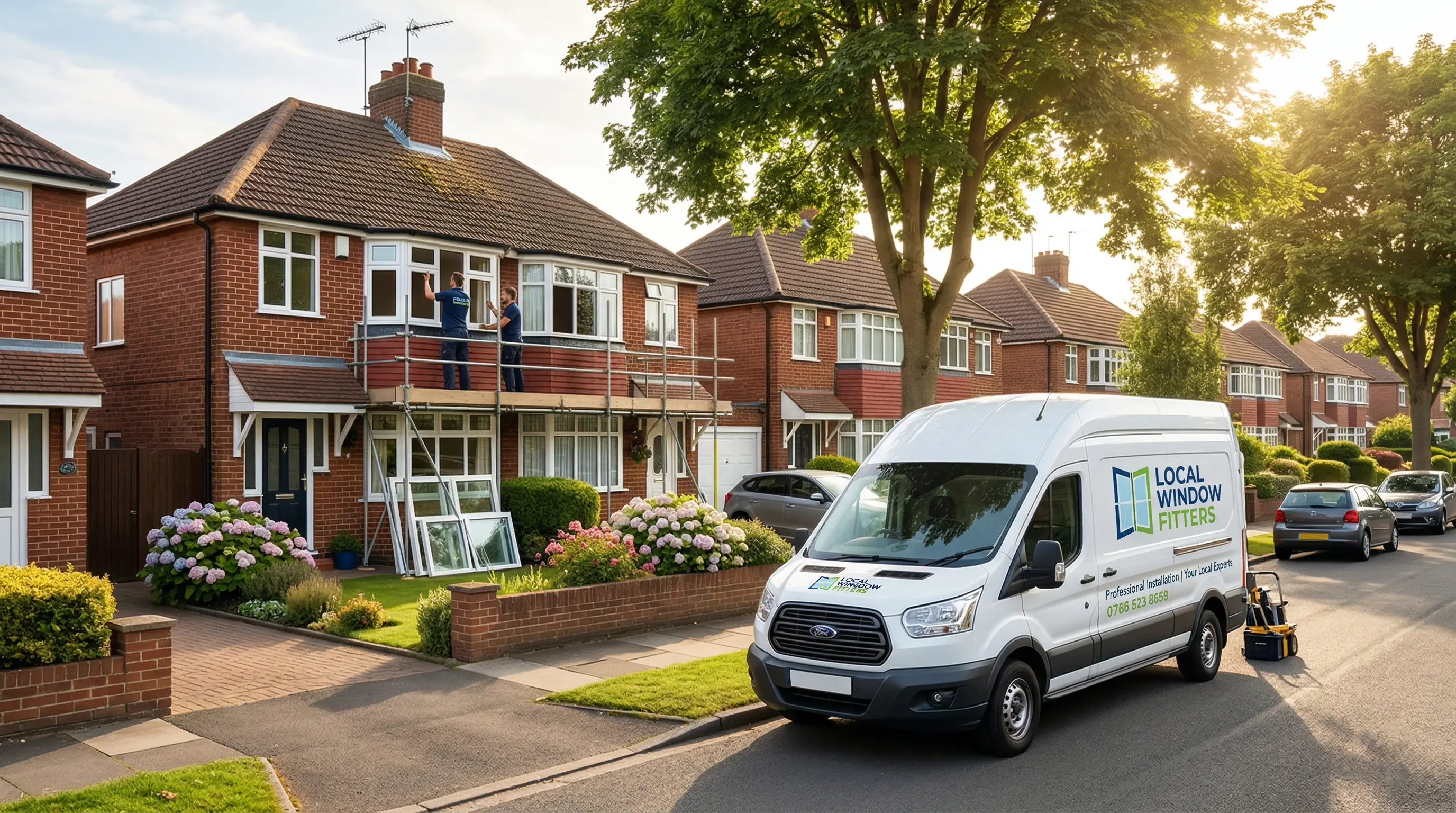 Dominating your local areaLocal dominance comes from being findable, referable and memorable in your patch, not from outspending bigger firms on marketing..
Turn reviews into a system, not a favour
Reviews aren't a nice extra. They're the filter that decides whether you make the shortlist. The firms that win ask every time, at the same moment, with one tap to the right page. Ask on the day you finish, while the customer can still see the difference your work made.
The smartest setup captures feedback in two stages: a quick private rating at job completion, then a public review request only for genuinely happy customers, with lukewarm scores flagged for a quiet follow-up before they ever post. FitterPal's customer feedback feature handles this from the job record. The broader reputation playbook sits in keeping and improving your reputation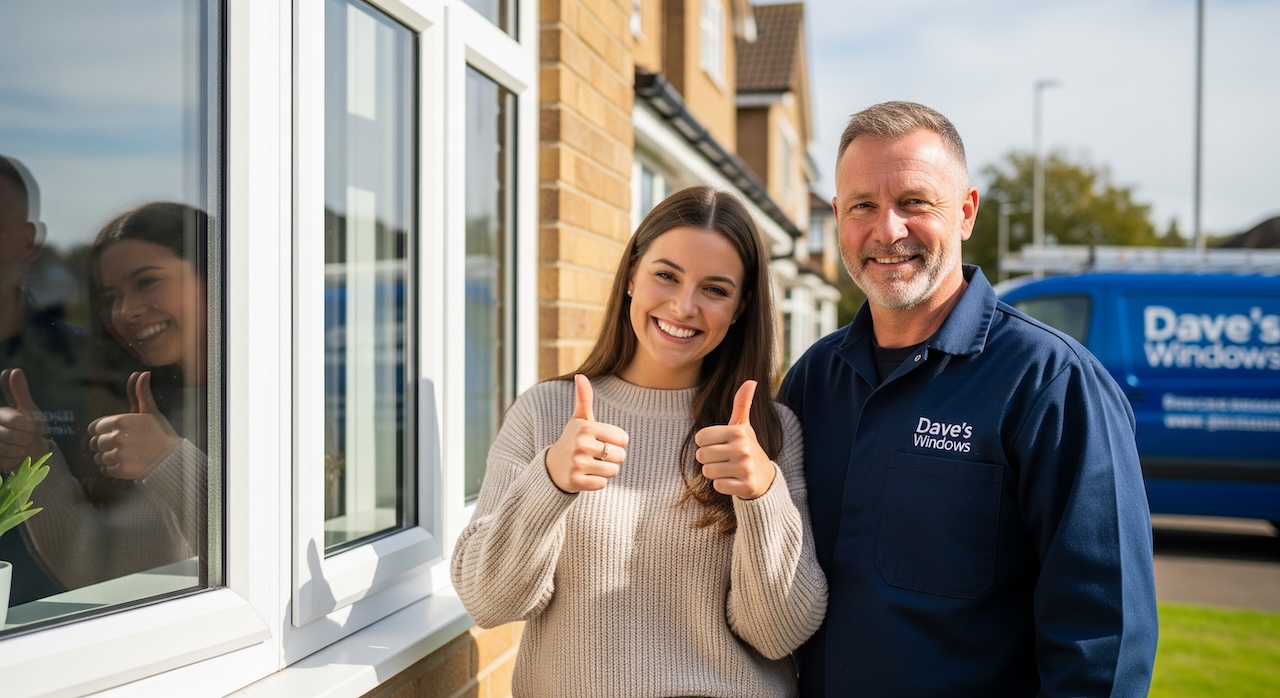 Your Reputation is Everything: How to Keep and Improve ItYour reputation is a measurable filter that decides who even calls you, so protect it by being reliable, asking for a review after every job, and keeping a steady stream of recent feedback..
Make the street sell for you
Digital gets you on the shortlist. Physical proof closes the neighbour who's already thinking about windows because they watched your crew work next door.
A professionally wrapped van turns daily driving into local advertising at a fraction of the cost per view of almost any other medium, with a single vehicle generating tens of thousands of impressions a day in busy areas (Outdoor Advertising Association of America, via ProVinyl). Parked outside a completed job, it's proof of work for the whole street.
Add a tidy signboard for a week (with the homeowner's permission), and drop a postcard to the ten houses either side pointing to before-and-after photos of the job online. The geography is tight, the evidence is visible, and the conversion rate beats a blanket leaflet drop because the social proof is right there on the road they live on.
Referrals and partnerships: leads that arrive pre-sold
Word of mouth sits alongside Google as one of the biggest pre-contact influences in local decisions. A referral isn't just a free lead, it's a lead that skipped the scepticism phase. The mistake is leaving it to chance. Put one line on your invoice, mention it when you hand over the FENSA paperwork, and track where customers came from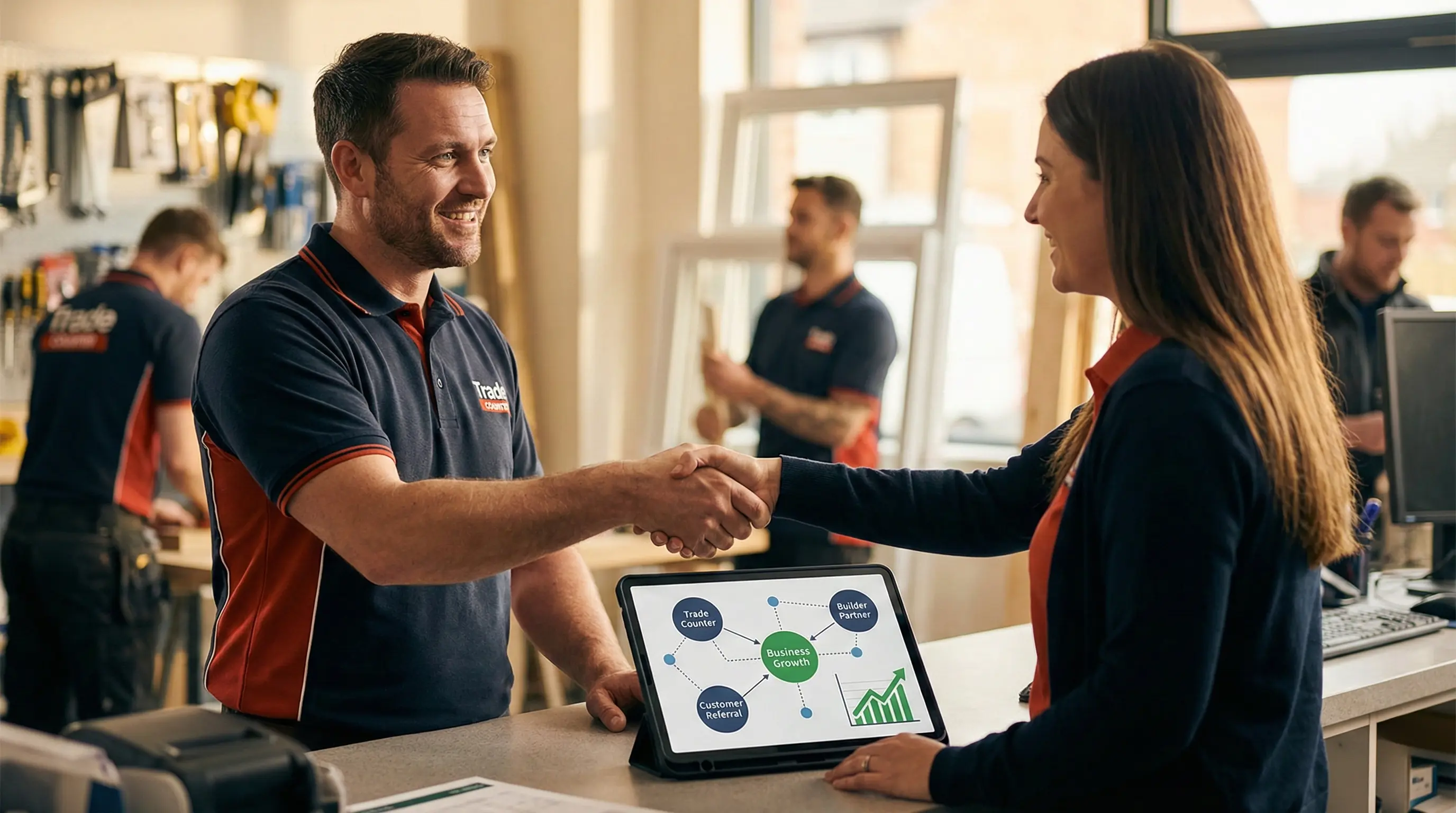 Where does your work actually come from? How to track referrals properlyYou can't nurture your best referrers or spot them going quiet if you don't know which relationships are actually sending quoted and invoiced work. so you know whether referrals are actually compounding or just happening occasionally.
Partnerships work the same way. Builders, conservatory firms, letting agents and estate agents see tired windows constantly. A transparent finder's fee or a ready-priced "landlord window pack" puts your name in their inbox when a job appears, often before it ever hits Google.
Win the three-quote race on speed and clarity
Homeowners typically contact two or three fitters and lean toward whoever replies first with a clear next step. Analysis of 1.25 million sales leads found firms responding within an hour were nearly 7 times more likely to qualify the enquiry than those who waited just an hour longer (Harvard Business Review). That isn't about working harder. It's about not letting enquiries sit in voicemail while you're on a ladder.
Same-day acknowledgement with two survey slots beats "I'll get back to you next week" every time. A branded email address A Quick Guide To Setting Up A Branded EmailQuotes from a free email address signal side hustle, not a proper business, so get a domain and use you@yourbusiness.co.uk on every quote and reply. on your own domain, templated SMS replies, and quotes sent while you're still on the drive all signal an organised firm. FitterPal logs every lead, supports same-day replies, and lets you quote cleanly on site so nothing slips between the enquiry and the booked survey. Then follow up quotes
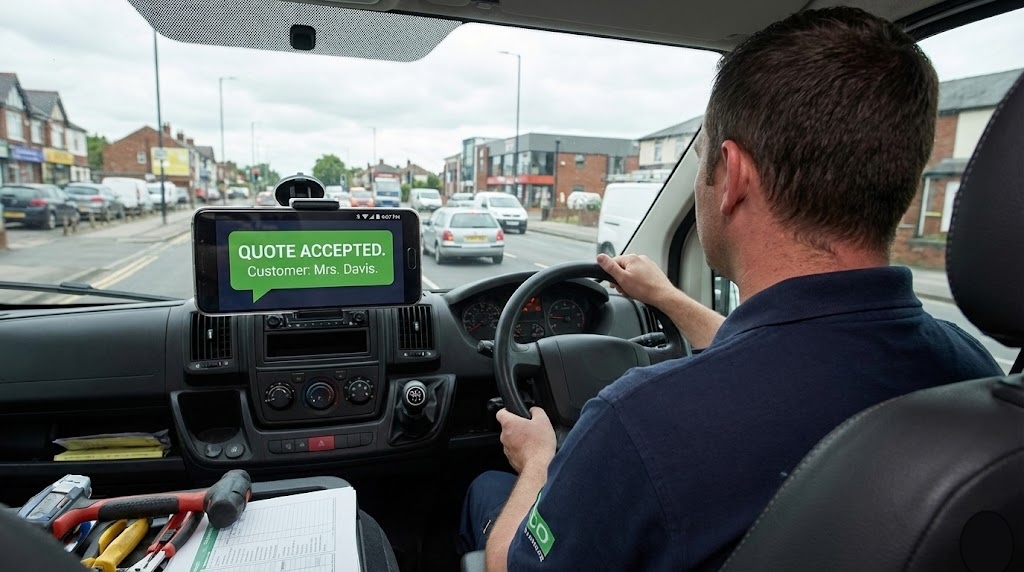 Why your window fitting quotes keep going cold (and the follow-up system that fixes it)Most quotes go cold from inertia, not price, and a timed follow-up sequence on every outstanding quote is the cheapest way to lift win rate without booking another survey. that don't convert, because the job often goes to whoever stays in touch.
Measure what actually fills the diary
Marketing for a small fitting firm isn't a campaign, it's a loop. Tag every job by source: map pack, referral, van sighting, builder partnership, repeat customer. Review it quarterly and double down on what delivers booked surveys at healthy margin, not just enquiries.
When something works, like signboards on post-war semis or postcards after every install, turn it into a checklist on every qualifying job. Stop doing tactics you can't trace. The firms that grow steadily know which pound bought which customer.
Where to start
Pick one gap you can fix this week. If your Google profile is incomplete, fix that before you spend on ads. If enquiries go unanswered for a day, fix response time before you worry about van wraps. If you never ask for reviews, start there before you chase new channels.
More customers come from visibility, trust and speed working together, not from a single gimmick. Nail the shortlist, earn the review, reply like you want the job, and measure what comes back. The diary fills when the system does.