The chaos of running a fitting business off spreadsheets, texts and scraps of paper doesn't feel like a cost. It feels like just how the job is. But it has a number, and the number is brutal: UK tradespeople lose an average of 7 to 8 hours a week to admin, around 384 hours a year, the equivalent of ten full working weeks (UK Admin Drain Report 2026). That's not the fitting. That's the chasing, the retyping, and the "which version of the schedule is right?"
You almost certainly already know this is dragging on you. What's worth examining is exactly where the time goes, why throwing more apps at it often makes it worse, and what actually cuts it.
The chaos has a price, and most owners never count it
Put a rate against those lost hours and the number gets uncomfortable. For a self-employed tradesperson on an effective £45 an hour, eight hours of weekly admin is over £17,000 a year of time not spent on billable work. For a small firm charging £65 an hour, it's north of £25,000 (UK Admin Drain Report 2026).
The reason it persists is that 83% of owners have never actually calculated what admin costs them, so it never gets treated as the expense it is. And it doesn't even stay inside working hours: 77% of trade owners do their admin in the evenings, and nearly half give up part of the weekend to it. The cost isn't only money. It's the time you don't get back.
Where the time actually goes
It's rarely one big task. It's the friction between scattered tools. A customer's details live in your phone, the survey photos in your camera roll, the quote in a Word file, the schedule on a whiteboard, and the invoice in your accounts app. Nothing talks to anything else, so you become the integration: retyping the same address four times and reconciling it all in your head.
That fragmentation is also where the expensive mistakes breed. A fitter turns up to the wrong site off an outdated WhatsApp message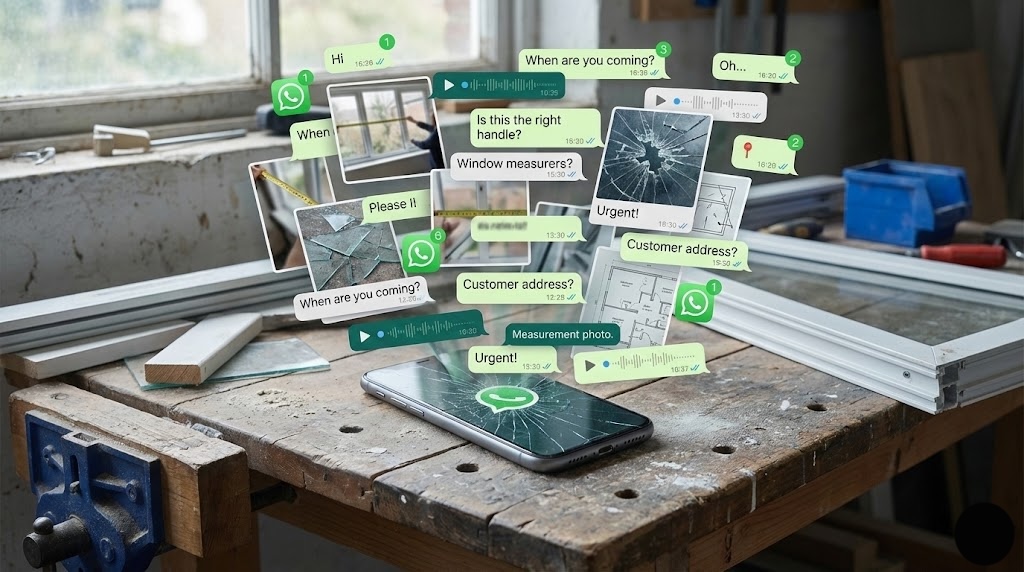 The hidden cost of running your fitting business from WhatsAppWhatsApp feels free until your job photos, customer history and fitter knowledge live on personal phones instead of in the business, and then every dispute, handover and evening ping has a hidden cost.. Materials get ordered twice because nobody can see the first order. A quote goes cold because the follow-up lived only in someone's memory. Each slip is small. Across a year they're a serious dent in your margin, and you only notice them in hindsight.
Why more software often makes it worse
Here's the part most "go digital" advice skips: adding tools can increase the chaos rather than cut it. A separate app for quotes, another for scheduling, another for photos, and a fourth for invoices just gives you four more log-ins and four more places for information to fall between. You've digitised the silos, not removed them.
This is the real reason generic software disappoints. In the same research, 75% of owners had tried automation tools but only half felt they saved real time, and the defining failure was that generic tools never capture a trade's actual workflow, regulations and terminology (UK Admin Drain Report 2026). A CRM built for software sales teams doesn't understand a survey, a remake, or a FENSA certificate. You end up bending your business to fit the tool.
The fix isn't more software. It's fewer systems doing more of the job together, built for how fitting actually works.
What one connected system actually changes
The win isn't a prettier dashboard. It's that information is entered once and travels. The enquiry becomes the customer, the survey feeds the quote, the accepted quote becomes the scheduled job, and the completed job becomes the invoice, without you retyping anything between them.
That single change is where the hours come back. Trade owners who moved their admin onto fitting-focused software report saving around 7.7 hours a week (Gas Engineer Software, 2025 report), close to the entire admin burden the average firm carries. It also gives you something scattered tools never can: a live, honest view of which jobs are profitable, what's behind, and what's waiting to be invoiced, so you stop running the business in the dark How to organise a window fitting businessAn organised fitting business knows where every job stands, keeps customers and schedules in one place, and attaches photos to jobs instead of losing them in phones..
How FitterPal cuts the chaos
FitterPal is built specifically for window and door fitters, which is the point. Every job holds its enquiry, survey, photos, quote, schedule and invoice on one record, in language that matches how you actually work, not generic CRM jargon you have to translate.
Your fitters see the right address, notes and photos on their phones, so there's no "which schedule is current?" Your office sees quoted-versus-actual and what needs chasing without rebuilding a spreadsheet. Because it's one connected system rather than four bolted together, the friction between tools, the bit quietly eating your week, simply isn't there. If you want the wider view of the tool landscape first, see best software for window fitting businesses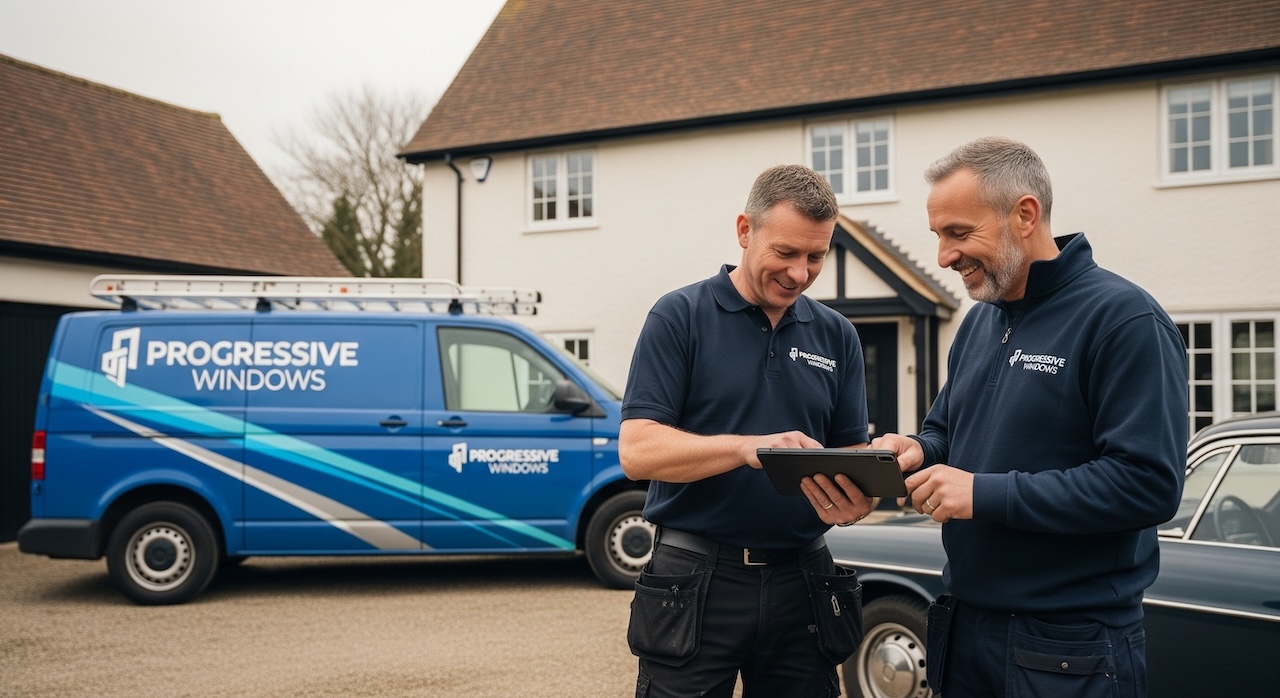 Best software for window fitting businessesPick fitting business software by joining up enquiry, quoting, scheduling, site photos and invoicing in one workflow instead of juggling separate log-ins..
Where to start
Don't digitise everything on day one. Start by working out your own number: roughly how many hours a week do you and the office lose to admin, and at your rate, what's that worth a year? Most owners are quietly shocked, and that figure is what justifies fixing it.
Then collapse the worst silo first, usually the gap between quoting and scheduling, or photos and job records. The goal isn't to work harder or to own more apps. It's to stop being the glue between disconnected tools, and get those ten weeks a year pointed back at fitting.