Most advice about investing in your business is really a shopping list: better tools, more marketing, some training. The problem isn't the items, it's the absence of a framework for choosing between them. A good capital allocator doesn't ask "is this worth buying?" They ask "is this the best available use of the next pound, given what else it could do?" Every pound has an opportunity cost and an expected return, and the gap between the best and worst place to put it is enormous.
That discipline matters more right now than it has in years, because the market is rewarding it. The UK fenestration market is worth around £3.5 to £4 billion and, after a flat couple of years, is forecast to grow only 2 to 3% a year through 2029 (Glazing Today). In a low-growth market you don't grow by riding the tide, you grow by taking share. And share is being vacated: the number of PVCu fabricators has fallen from 1,534 in 2014 to 1,132 in 2025 (Insight Data). Weaker operators are leaving. The capital you deploy well over the next few years decides whether you're one of the firms absorbing their work or one of the firms they take down with them.
Here is how the highest-return investments actually rank, from a returns-on-capital point of view rather than a wishlist.
Investment 1: the retention and referral engine
The single highest-return pound in most fitting businesses isn't spent winning new customers. It's spent making sure the ones you've already won come back and send others. The reason is unit economics. Across home-service trades, retaining existing customers consistently returns several times more than acquiring new ones, because the acquisition cost is already paid and referred customers both cost less to win and are worth more over their lifetime (TruLine, home-services CLV analysis).
The benchmark worth internalising is the LTV:CAC ratio, lifetime value divided by what it costs to acquire a customer. Below 3:1, you have a marketing problem; above it, every pound into acquisition is genuinely compounding. Most fitters have never calculated either number, which means they're allocating their marketing budget blind. The fix is cheap: tag where every job came from, ask for a review on completion, and follow up past customers. A systematic referral habit and a managed reputation Your Reputation is Everything: How to Keep and Improve ItYour reputation is a measurable filter that decides who even calls you, so protect it by being reliable, asking for a review after every job, and keeping a steady stream of recent feedback. is the closest thing the trade has to free, compounding distribution. Before you spend a pound on ads, spend it here. If you don't know your numbers yet, that work starts with getting more customers the measurable way
 How to get more customers for a window fitting businessMost window jobs are decided before anyone calls you, so winning customers means showing up in local search, earning reviews, and responding faster than the other two firms on the shortlist..
Investment 2: the people, and keeping them
Labour is your largest cost and your scarcest input, which makes retention of fitters a financial decision, not just an HR one. The Construction Industry Institute found that a 10% rise in workforce turnover drives a 2.5% rise in total project labour costs, before you count the rework and lost productivity a green replacement brings (Construction Industry Institute, via Bridgit). Every fitter who walks takes margin with them.
The market makes this worse, and therefore the investment more valuable. The CITB forecasts UK construction needs around 41,200 extra workers a year to 2030, with too few entering and too many experienced hands leaving (CITB Construction Workforce Outlook). Skilled fitters will get harder to buy, so the firms that win are the ones that grow and keep their own. That tilts the maths heavily towards training and apprenticeships Apprenticeships for Small Window Fitting CompaniesWhen good fitters are nearly impossible to hire, growing your own through a structured apprenticeship is often cheaper and more reliable than poaching from a competitor.: you're not just filling a gap cheaper than the agency rate, you're building loyalty into people at the point they're cheapest to develop and most likely to stay.
Investment 3: systems that remove you from the critical path
This is the investment experienced owners most often misclassify as "overhead". It is, in fact, the one with the longest-tailed return, because it pays out twice: once in daily efficiency, and again, much larger, in what your business is eventually worth.
The operational return is straightforward. When jobs, measurements, schedules and invoices live on one record rather than in your head and across three phones, the avoidable errors, the double-bookings, the forgotten follow-ups, the wrong orders, stop quietly bleeding margin. But the strategic return is the one intelligent owners should weigh most heavily, and it's covered next. A business that runs on documented systems instead of the owner's memory is a fundamentally different asset, and you build that asset one process at a time, starting with knowing your true job costs Calculating Job Costs: Tools and Tips for Accurate QuotesJobs that look fine on the quote still leak margin when you skip consumables, overhead and contingency, and tight costing with real labour and supplier numbers is how you stop donating profit..
The payoff most owners ignore: enterprise value
Here's the part a venture investor would lead with and most trade advice never mentions. The investments above don't just improve this year's profit, they change the multiple your business sells for one day. And the gap is not small.
Specialty trades, glazing explicitly among them, command materially higher valuations than general contractors, typically in the region of 4 to 6 times EBITDA versus the low single digits, and the single biggest driver of where you land is the proportion of predictable, systematised revenue versus lumpy, owner-dependent project work (CT Acquisitions, construction valuation analysis). The flip side is blunt: owner-dependency is the number one thing that destroys value. If you are the estimator, the project manager and the only relationship every customer has, a buyer prices that risk straight out of your cheque.
Read the three investments back through that lens and they rearrange into something bigger than efficiency. A retention engine is recurring, predictable revenue. A trained, loyal crew is a business that runs without you. Documented systems are the proof a buyer needs that it will keep running after you've gone. You are not just spending to make next quarter smoother, you are compounding the equity value of the whole thing, whether you sell in three years or twenty. The same moves that make the business calmer to run make it worth a multiple more to own, and the mechanics of realising that are worth understanding early in how to sell a window fitting business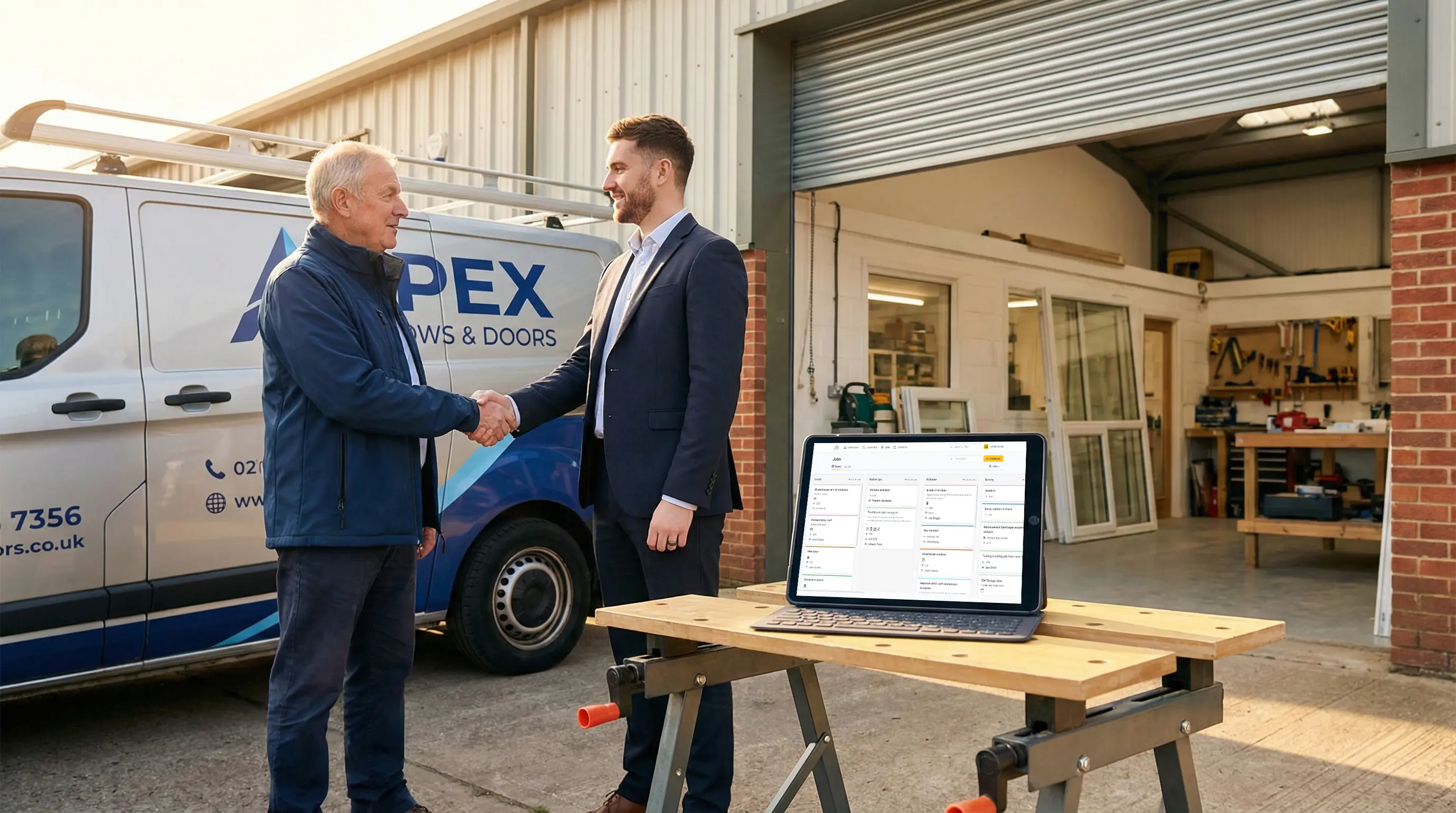 How to sell a window fitting business: what buyers actually look forBuyers pay more for businesses that run without the owner, which means organised customer records, job history and documented workflows instead of knowledge in your head..
The big capital bets, judged properly
This is where most owners deploy the largest cheques, and where the capital-allocator's question, what return, over what period, against the alternatives, sorts the genuine investments from the expensive mistakes. Run the five most common big bets through it and they do not score equally.
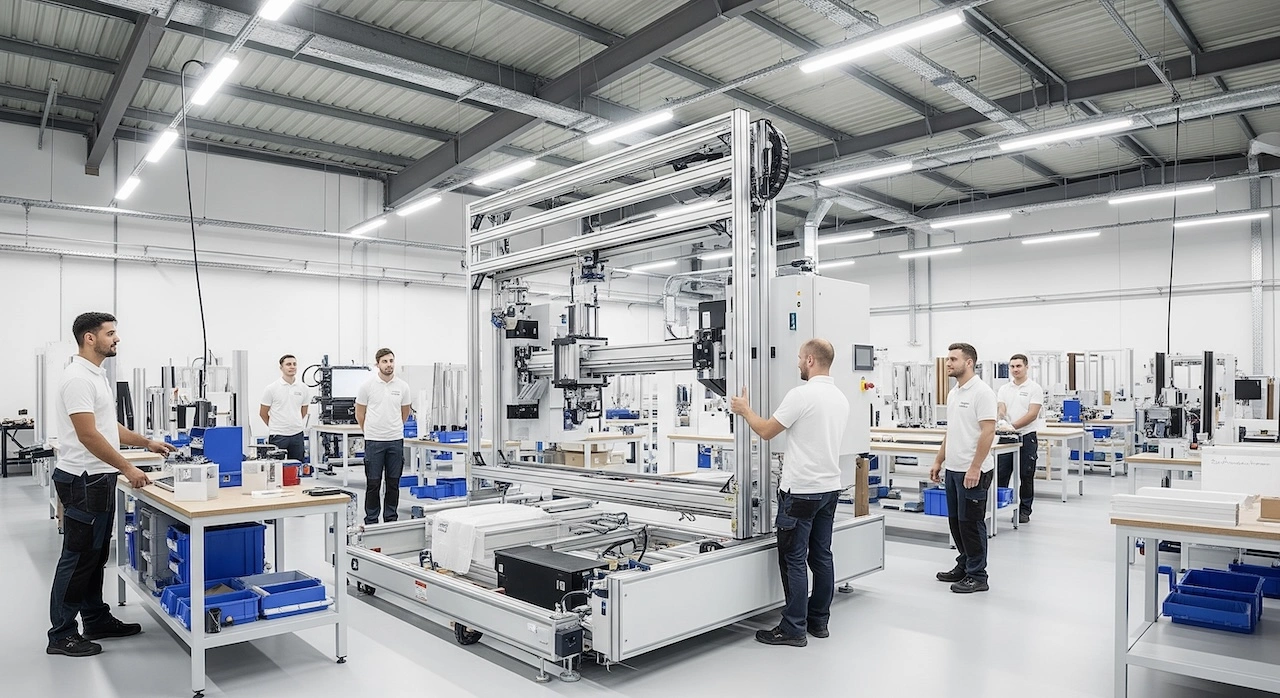
In-house manufacturing. Bringing fabrication in house is the one that feels most like growth and most often isn't. It converts a variable cost (buying frames as you need them) into a large fixed one (a unit, plant and a line that has to be kept fed whether installs are booked or not). It only pays when your volume is high and predictable enough that the margin you capture beats the fabricator's price and you can keep the line busy. With fabricator numbers thinning, there's a real prize for whoever has the scale to take it, but for most installers it's a worse use of capital than it looks: you take on a second business, with its own demand risk, that turns your flexible cost base rigid. Buy in until volume forces the question, then model it on capacity utilisation, not gut.
Bigger premises. A unit rarely generates a pound of revenue on its own; it's overhead. The only version that's an investment is the one that removes a constraint you can already feel and sell against: you're losing jobs because you can't store stock, or you're paying over the odds because you can't buy materials in bulk. If you can't name the specific bottleneck more space removes, it's a lifestyle purchase dressed as growth. Solve it with better stock and job organisation How to organise a window fitting businessAn organised fitting business knows where every job stands, keeps customers and schedules in one place, and attaches photos to jobs instead of losing them in phones. first, and let demonstrated demand, not ambition, pull you into a bigger building.
More vans. A van only earns when there's a crew and a full diary to put behind it. The binding constraint on a fitting business is almost never the vehicle; it's skilled labour and booked work. Add a van ahead of those and you've parked idle capital on the drive. Sequence it the other way: win the demand, hire and train the crew, then the van follows as the obvious next step rather than a speculative one.
Wrapping the vans you already have. This is the inverse bet, and for most firms an easy yes. A wrap is a one-off cost on an asset you're already running and insuring, and it has the lowest cost per thousand views of any advertising medium, a fraction of a billboard's, while a single van generates tens of thousands of local impressions a day (Outdoor Advertising Association of America, via ProVinyl). It turns daily driving you're paying for anyway into years of local brand-building, and it directly supports the reputation and referral engine that sits at the top of this list.
A new website. Judge it on leads and conversion, never on how it looks. A site built to capture and convert local enquiries earns its keep through your acquisition cost; a handsome brochure nobody finds is a sunk cost with a logo. The bar is simple: will this measurably generate or convert enquiries? If you need a lead engine rather than a showpiece, FitterPal's lead-focused website builder is built for exactly that, which keeps your capital pointed at return rather than aesthetics.
Where to start
Pick your numbers before you pick your purchases. Work out, even roughly, your acquisition cost and customer lifetime value, your fitter turnover rate, and how much of your business depends on information only you hold. Those three figures will tell you where the next pound earns the most, and for most firms it will not be the thing they were about to buy.
Then sequence it: shore up retention and reputation, invest in keeping and growing your people, and put the operational backbone in place that both runs the business and makes it sellable. FitterPal is built to be that backbone, keeping jobs, schedules, customers and invoicing on one record, so the systems investment that improves this week also compounds into a more valuable company. Invest like a capital allocator, not a shopper, and a flat market becomes the best possible time to pull ahead.