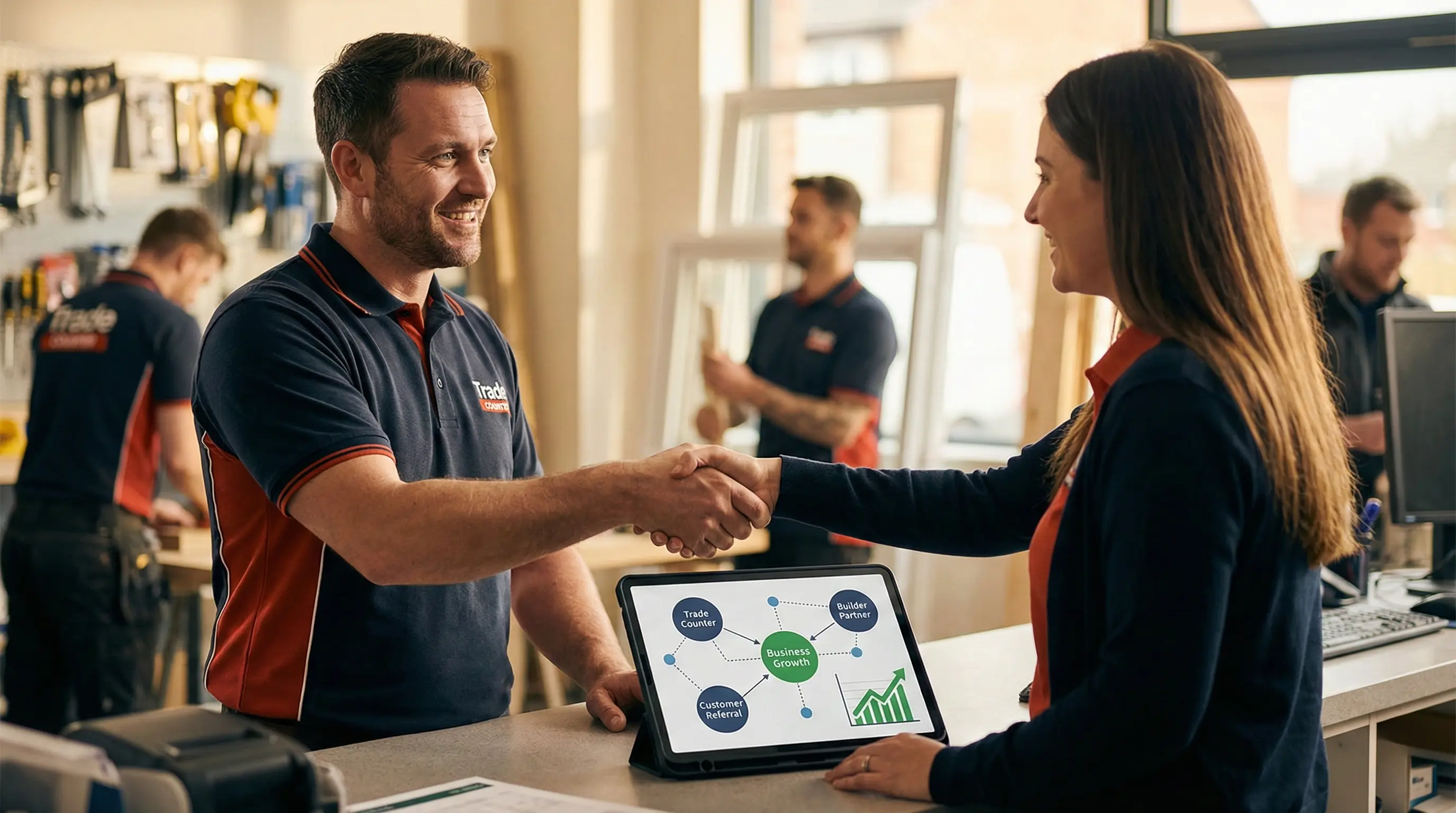
Ask any window fitter where their work comes from and the answer is usually the same: "word of mouth, mostly." It's true. Referrals are the lifeblood of most fitting businesses. Happy customers tell neighbours. Trade counters recommend you. Builders pass your name on.
But "word of mouth" isn't a strategy. It's a description of something you're not measuring. And what you don't measure, you can't improve.
The referral blindspot
Right now, you probably couldn't answer these questions:
Which customer has referred you the most work in the last two years? How much was that work worth?
Is the trade counter that used to send you leads still sending them? Or did that quietly dry up six months ago?
That builder who sends occasional jobs - is it two a year or ten? Are they high-value or small repairs?
You have a general sense of who sends you work. But general sense doesn't tell you who deserves a thank-you bottle at Christmas, who's worth nurturing more actively, or who's stopped referring and might need a relationship repair.
This blindspot costs you in two ways: you underinvest in your best sources, and you don't notice when good sources go cold.
Why tracking changes behaviour
The moment you start tracking referrals, you start thinking about them differently.
You see who matters. That customer who's sent you four jobs worth £18,000 this year? You probably knew they were good, but now you know exactly how good. That changes how you treat them - the thank-you calls, the priority scheduling, the Christmas gift.
You spot the gaps. The trade counter that sent three jobs last year but nothing in the last six months - something changed. Maybe a new staff member doesn't know you. Maybe a competitor got in there. Either way, you only notice if you're tracking.
You can ask smarter. When you know Mrs. Patterson has referred two neighbours already, you can ask if she knows anyone else. When you know a builder's referrals convert at 80%, you can invest time building that relationship. Data makes your efforts targeted instead of scattered.
You can calculate ROI. Spending £200 on a thank-you gift for someone who's sent you £15,000 in work is a no-brainer. But you only know to do it if you've tracked the £15,000.
What to track
Referral tracking doesn't need to be complicated. For each job, you record one thing: where did this come from?
That might be:
A customer. "Referred by Mr. Henderson" - someone you've worked for before who passed your name to a neighbour or friend.
A trade contact. "Referred by City Glass Trade Counter" - a supplier or trade business that recommends you to their customers.
Another trade. "Referred by Dave's Building" - a builder, plasterer, or other tradesperson who works with your customers and passes your details.
Marketing. "Google search" or "Facebook ad" - for when leads come from your own marketing rather than referrals.
One field, filled in when you create the job. Takes five seconds. But over time, it builds a complete picture of where your business actually comes from.
How FitterPal tracks referrals
FitterPal has a referral field on every job. When a new enquiry comes in, you select who referred it - an existing customer, a trade contact, a marketing source. If the referrer doesn't exist yet, you add them in seconds.
The power comes when you look at referrers over time. Open any referrer and you see every job they've sent you: the customer names, the job values (quoted and invoiced), the dates. At a glance, you know exactly what that relationship has been worth.
You can see that the Henderson family has referred three jobs totalling £12,400 in invoiced work. You can see that the trade counter has sent eight leads this year, seven of which converted. You can see that the builder who felt important has actually only sent two small jobs in eighteen months.
This isn't data for data's sake. It's the information you need to invest your relationship-building time wisely.
Turning data into action
Once you're tracking, patterns emerge. Here's what to do with them:
Thank your top referrers properly. End of year, pull up your biggest referral sources. A bottle of wine, a gift card, a genuine thank-you call. They've sent you thousands in work - acknowledge it. This isn't just gratitude; it's investment in future referrals.
Reactivate quiet sources. Someone who used to refer regularly but hasn't in six months is a signal. Drop in on the trade counter. Call the builder. The relationship might just need a nudge - or there might be a problem worth fixing.
Double down on what works. If one trade counter sends consistently good leads and another sends tyre-kickers, you know where to spend your time. If customer referrals convert better than web leads, you know to ask for more referrals.
Set referral goals. Once you know your baseline - say, 40% of work comes from referrals worth £80k annually - you can set a target. What would 50% look like? What would it take to get there?
The compound effect
Referral tracking pays off over time. Six months of data is interesting. Two years of data is transformative.
You start to see patterns: which types of referrers send the best jobs, which seasons are strongest for referrals, which customers are one-time referrers versus ongoing advocates.
You make better decisions: who to prioritise, where to invest time, when to worry about a drying pipeline.
And crucially, you shift from reactive to proactive. Instead of noticing referrals when they arrive, you're actively cultivating them - because you can see exactly what's working and what needs attention.
Know where your work comes from
"Word of mouth" isn't a marketing strategy. It's a black box you haven't opened yet.
Open it. Track every referral. See exactly who's sending you work and how much it's worth. Then use that knowledge to nurture your best sources, fix fading relationships, and grow the channel that probably already drives most of your business.
FitterPal makes this effortless - one field per job, and suddenly you have complete visibility into where your work actually comes from. Start tracking today, and in a year you'll wonder how you ever ran the business without it.