If you're searching for a window fitting app, you've probably already tried running things from WhatsApp, spreadsheets, or memory. It worked for a while. Now it doesn't.
The question isn't whether you need an app - you're here because you've figured that out. The question is what actually matters when choosing one, and whether generic field service apps are the right fit for a window fitting business.
What a window fitting app needs to do
Strip away the marketing and a window fitting app has one job: get information between your fitters and your office without phone calls, texts, and guesswork.
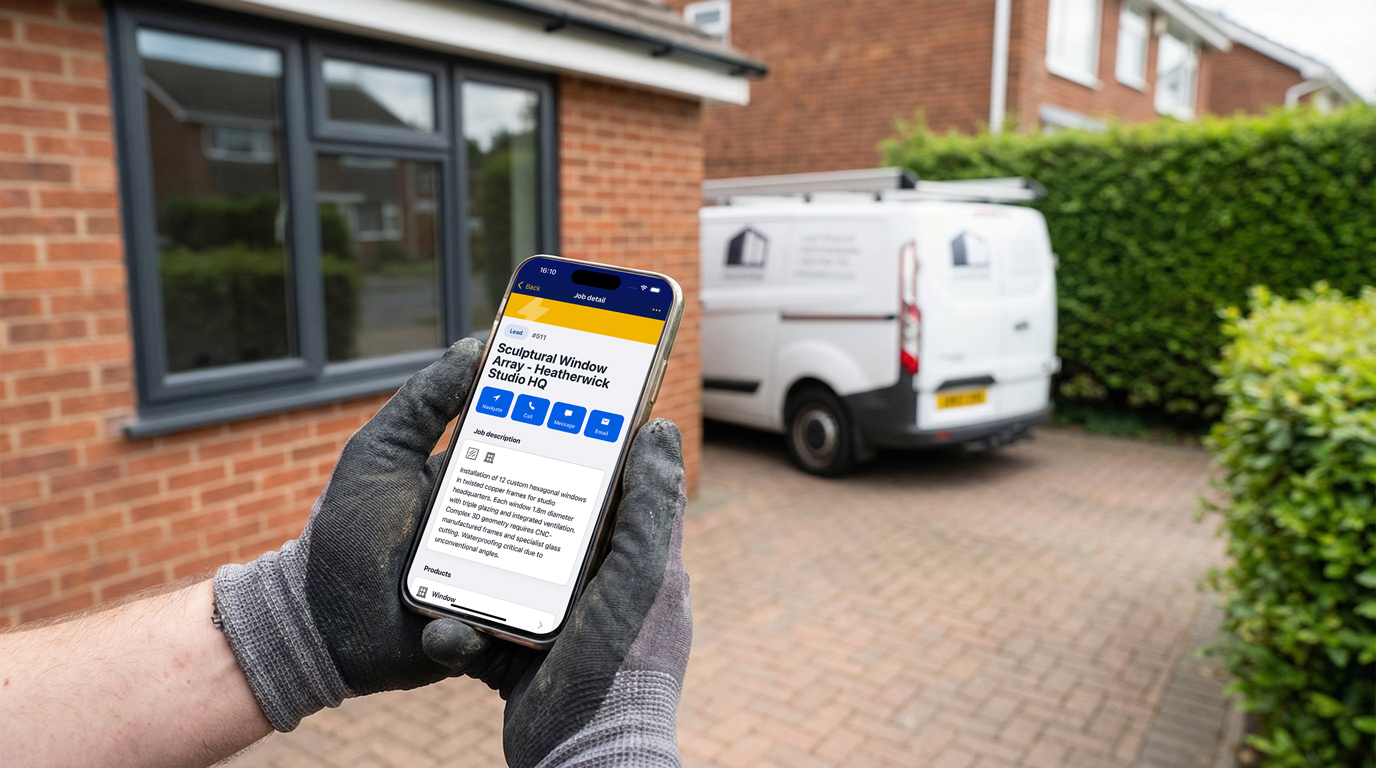
For your fitters: See today's schedule. Get the address, customer details, and job notes. Check photos from the survey. Mark jobs in progress or complete. Upload photos from site. Add updates when something changes.
For your office: See where jobs stand in real time. Know when fitters arrive and finish. Receive photos without chasing. Keep a record of everything that happened on each job.
That's the core. Everything else - scheduling, quoting, invoicing - builds on this foundation of information flowing reliably between field and office.
Why generic apps fall short
There are dozens of field service apps on the market. Most are built for general trades or service businesses. They work, technically - but they weren't designed for window fitting specifically, and you feel it.
Signal assumptions. Generic apps often assume reliable mobile signal. Window fitters work in basements, new builds with no service, rural properties miles from a mast. An app that needs constant connection fails exactly when you need it.
Complexity. Enterprise field service software has features for industries you're not in. Routing for 50-van fleets. Inventory management for parts warehouses. Your fitters don't need that - they need to see their next job and upload some photos. Complexity slows adoption.
Desktop-first design. Many apps were designed for office use and had mobile bolted on later. The mobile experience is clunky, slow, or requires too much typing. Fitters on site with dirty hands and five minutes between tasks won't use it.
The result: you pay for software your team doesn't use, and you're back to WhatsApp within a month.
Offline capability isn't optional
This deserves its own section because it's the most common failure point.
Your fitter arrives at a site with no signal. They need the customer's phone number to say they've arrived. They need the job notes to check what was agreed. They need to take photos. If the app requires internet for any of this, they're stuck.
A proper window fitting app works offline by default. Job details download when there's signal. Photos and updates save locally. Everything syncs automatically when connection returns. The fitter doesn't even think about whether they have signal - the app just works.
Ask any app vendor: "Does it work offline?" If the answer is vague or qualified, keep looking.
What to look for when choosing
- Native app, not just mobile web. A native iOS app and Android app performs better, works offline properly, and feels right. Web apps in a mobile browser are a compromise.
- Simple interface. Your fitters should be able to use it within minutes, not after a training session. Big buttons, clear navigation, minimal typing. If it looks complicated, it is complicated.
- Photos built in. Taking photos should be one tap, and they should attach to the job automatically. No separate uploads, no emailing to the office, no hunting through camera rolls.
- Built for your trade. An app designed for window fitting understands your workflow. Surveys, installations, remedials. FENSA requirements. Multi-day jobs. The terminology makes sense because it's your terminology.
- UK-based support. When something's not working, you want to talk to someone who understands your business, in your timezone, without navigating an overseas support queue.
FitterPal: built for window fitters
Your fitters download the app, log in, and see their schedule. Each job shows the customer details, address, job notes, photos from the survey, and any updates from the team. They can mark jobs in progress, add notes, upload photos, and complete forms - all from their phone, all working offline.
Back at the office, you see everything in real time. When a fitter marks a job complete, you know. When they upload completion photos, you see them. When they add an update on an issue on site, it's there. No chasing, no "did you get my text?", no waiting until they're back to find out what happened.
The app is designed for blokes on site with limited time and limited patience for technology. Simple screens, clear actions, minimal typing. It works because it's built for how fitters actually work, not how software designers imagine they work.
What changes when your team has the app
Monday morning, your fitters check the app and see their week. No group text listing addresses. No calls asking "where am I going first?" It's there.
On site, they check the job notes, previous survey and see the customer wanted the trickle vents in white, not black. They don't have to call the office. They don't have to guess. The information is on their phone.
Job done, they take completion photos and mark it complete. By the time they're in the van, you've already seen the photos and can send the invoice. No waiting for them to get back. No chasing for pictures.
Six months later, customer calls with a query. You pull up the job, see every visit, every note, every photo. You answer their question in thirty seconds instead of promising to call back after you dig through records.
Hiding sensitive information
There should be a line between what the company admins and fitter see – the sensitive finances and documents.
Quotes, invoices, contracts are none of your fitters business (unless you want it to be) so the app they use should ensure it's not visible.
FitterPal never shows quotes or invoices in the app to users marked as fitters and admins have controls over who sees what documents. Piece of mind without complexity.
The right app changes how you operate
A window fitting app isn't about being modern or high-tech. It's about information getting where it needs to be, reliably, without you having to chase it.
The right app makes your fitters more informed and your office less frantic. The wrong app becomes shelfware while everyone goes back to WhatsApp.
FitterPal was built to be the right app for window fitting. Native, offline-capable, simple, and designed for how your business actually works.