You've done the hard work. Driven to the property, measured up, spec'd the job, maybe even sat at the kitchen table explaining the difference between A-rated and triple glazing. You send the quote. Then... nothing.
A week passes. You meant to follow up but you had three installs back-to-back and it slipped. By the time you remember, they've gone with someone else. Or worse, they're still interested but assume you've forgotten about them.
This isn't a you problem. It's an industry problem. And it's costing window fitters thousands every year.
The real reason quotes go cold
Here's what most fitters don't realise: the moment you hit send on a quote, a clock starts ticking in the customer's head. Not yours. Theirs.
They're comparing you to the other two or three companies they've asked. They're weighing up price against trust. They're waiting to see who follows up first, because that tells them who actually wants the job.
The problem isn't that you don't care. It's that you're running a fitting business, not a sales operation. You're on site at 7am, covered in silicone by 3pm, and by the evening you're too knackered to remember which quotes went out when.
So the quotes sit there. Some convert. Most don't. And you never quite know which ones you lost because of price and which ones you lost because you simply didn't pick up the phone.
The 3-day rule that changes everything
Speak to any successful fitting company and they'll tell you the same thing: the follow-up matters more than the quote.
Not a desperate "just checking you got my email" message. A genuine touchpoint that shows you're organised, professional, and actually interested in doing the work.
The sweet spot? Three days. Long enough that they've had time to review the quote and compare options. Short enough that you're still fresh in their mind and the job hasn't gone elsewhere.
But here's the catch: you need to actually do it. Every time. For every quote. And that's where most fitters fall down, because there's no system reminding them which quotes need chasing today.
What a proper follow-up system looks like
Forget sticky notes on the dashboard. Forget trying to remember. A follow-up system that actually works has three components:
Visibility. You need to see, at a glance, every quote that's out there and how long it's been waiting. Not buried in an email thread. Not scattered across WhatsApp conversations. One place where you can see "this quote is 4 days old and no one's followed up."
Triggers. The system should tell you when to act, not wait for you to remember. A quote goes out, the clock starts, and three days later something nudges you. Simple as that.
History. When you do follow up, you need to know what's already been said. Nothing kills credibility faster than calling a customer and asking questions they already answered during the survey.
How FitterPal handles this
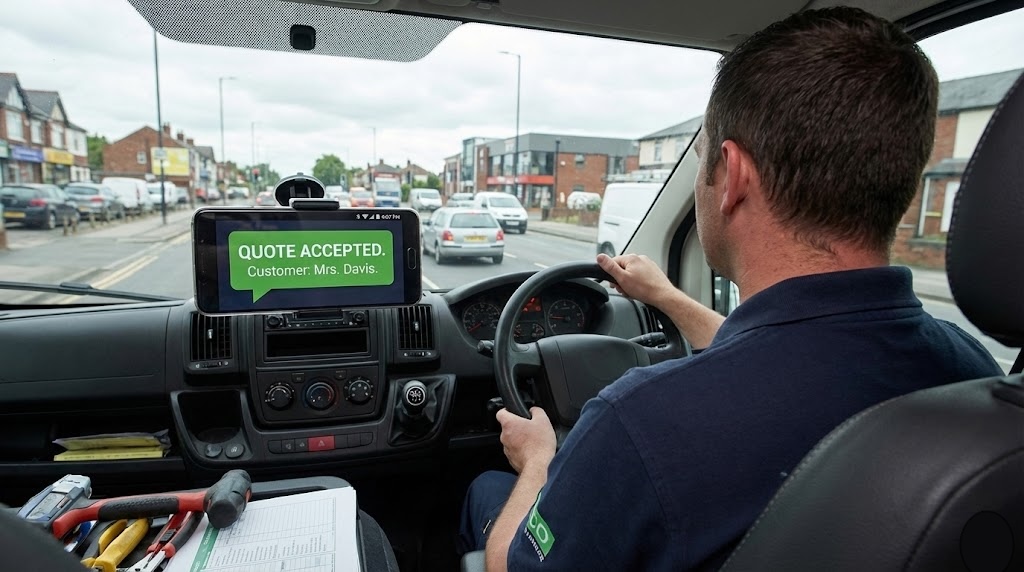
In FitterPal, every job moves through stages: from initial enquiry, to quote sent, to won or lost. The moment you mark a quote as sent, the system knows. It tracks how long that quote has been sitting there, and it surfaces the ones that need attention.
You open the app in the morning and you can see: "Three quotes need following up today." Not because you remembered. Because the system remembered for you.
Each job holds the full history: the customer's details, the notes from your survey, photos of the existing frames, any updates from the team. When you call, you're not fumbling. You know exactly what was discussed and what they're weighing up.
And critically, you can see patterns. Which quotes converted after one follow-up? Which ones went cold despite chasing? Over time, you stop guessing and start understanding your actual win rate.
The maths that should worry you
Let's say you send 20 quotes a month. Average job value: £3,000. Your current conversion rate is 30%, so you're winning 6 jobs for £18,000 in revenue.
Now imagine that consistent follow-up moves your conversion rate to 40%. That's 8 jobs. £24,000. An extra £6,000 a month from the same number of surveys, the same amount of measuring, the same petrol.
The quotes you're losing aren't bad leads. Many of them are good customers who just needed one more nudge. And right now, they're going to the fitter who followed up first.
Stop leaving money on the table
You're not going to become a sales machine overnight. You shouldn't have to. You're a window fitter, not a telesales rep.
But you can build a system that does the remembering for you. One that tracks every quote, flags the ones going stale, and gives you everything you need to make that follow-up call with confidence.
That's what FitterPal was built for. Not to turn you into something you're not, but to make sure the quotes you've worked hard to win don't slip through the cracks.
Book a demo today where we can walk you through how our system helps you intelligently manage your quotes.
Book a demo today where we can walk you through how our system helps you intelligently manage your quotes.